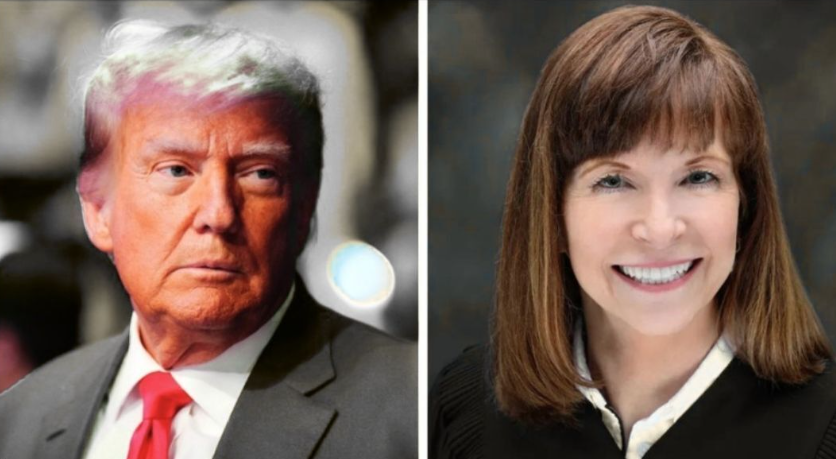
The recent ruling by Judge Jennifer L. Thurston has sent shockwaves far beyond the borders of her courtroom, reverberating through the entire landscape of U.S. immigration law. While federal judges are often called upon to make decisions with significant policy implications, few rulings ignite the combination of legal, political, and ethical debate that Thurston’s recent injunction has triggered. Appointed to the bench by President Biden, Thurston issued a sweeping order that temporarily halts the federal government’s effort to deport large numbers of undocumented immigrants in California. The ruling specifically blocks warrantless arrests by U.S. Immigration and Customs Enforcement (ICE) in several counties, including Kern County, where thousands of immigrant families live and work. By restraining the Trump-era mass deportation policies, the decision was immediately hailed by immigrant advocacy groups as a bold defense of constitutional rights and due process. At the same time, however, it has unleashed a storm of scrutiny, accusations, and controversy regarding potential conflicts of interest within the judge’s personal life.
The core of the controversy centers on Judge Thurston’s husband, Marc A. Thurston, a real estate professional deeply invested in multifamily housing in California. According to public records and real estate disclosures, Marc Thurston’s business portfolio includes numerous rental properties in areas heavily populated by immigrant tenants. Over the past several years, his investments have grown substantially, creating a financial stake in policies that affect tenant stability and housing markets. Videos once posted on his Instagram account, now deleted but preserved through social media archives, have made the connections explicit. In one video, Marc Thurston warned that aggressive deportation initiatives under the Trump administration would not only disrupt immigrant communities but would also destabilize local rental markets, threatening the profitability of his properties. The videos were widely circulated by conservative commentators, including Laura Loomer, who framed the content as proof that Judge Thurston’s personal life and household finances intersect with the very policies she recently curtailed.
Legal experts say this combination of circumstances raises serious questions under federal law. Under 28 U.S.C. § 455, judges are required to recuse themselves when their impartiality “might reasonably be questioned” or when a spouse’s financial interests could be affected by the outcome of a case. Critics argue that the direct link between the Thurston family’s financial interests and the population impacted by the injunction should have triggered automatic recusal. Supporters counter that the judge’s ruling is consistent with constitutional precedent and protections for noncitizens, framing the decision as a necessary counterbalance to aggressive deportation tactics. The juxtaposition of legal duty and personal connections has turned a single injunction into a highly public debate over the integrity of the judiciary and the fine line between public service and private interest.
The timing of the ruling added fuel to the fire. Judge Thurston issued the injunction shortly after the announcement of a federal initiative dubbed “Operation Return to Sender,” a renewed effort by ICE to conduct large-scale deportations of undocumented immigrants in the western United States. For immigrant advocates, the decision was a relief, a legal shield preventing families from being torn apart and communities from experiencing the sudden destabilization associated with mass deportations. For opponents, however, the decision reads as a cautionary tale of perceived favoritism: a federal judge whose household stands to benefit financially from the very population her order protects.
Social media amplified the controversy, with videos and news clips sparking heated online debate. Conservative commentators emphasized the deleted Instagram content, framing it as evidence of a deliberate concealment of potential conflicts. Liberal commentators and immigration rights organizations emphasized the human impact of deportation policies and praised Thurston’s ruling as a protection of civil liberties. The polarization is indicative of the larger national conversation surrounding immigration enforcement, judicial ethics, and political partisanship in the judiciary. Analysts note that cases like Thurston’s can have ripple effects, influencing public trust in judicial impartiality and sparking calls for stricter oversight of judges with potential financial entanglements.
The ethical dimensions of the controversy are further complicated by the proximity of the properties in question to the areas affected by the ruling. Kern County, one of the regions included in the injunction, has long been home to a significant immigrant workforce employed in agriculture, service industries, and other labor-intensive sectors. The sudden suspension of deportations in these areas effectively stabilizes the tenant base for landlords like Marc Thurston, who rely on consistent occupancy and rental income. Even if unintentional, the correlation between the judicial ruling and household financial gain has been seized upon by critics as a textbook example of why recusal standards exist. Legal scholars are dissecting the case, debating whether the mere appearance of potential bias, rather than actual misconduct, is sufficient to undermine public confidence in the court.
Beyond the financial angle, the controversy touches on larger questions about the role of federal judges in politically charged environments. Federal judges, especially those in high-stakes immigration cases, operate at the intersection of law, politics, and human consequence. Their decisions can affect the lives of thousands of people, influence national policy, and, as this case illustrates, potentially intersect with personal or familial interests. While judicial ethics codes are designed to prevent conflicts of interest, they rely heavily on the judge’s own disclosure and self-assessment, leaving room for dispute and public skepticism. Judge Thurston’s injunction illustrates the tension between making legally sound decisions and navigating the unavoidable entanglement of personal, political, and financial dimensions.
The implications for the Thurston household are also significant. While Marc Thurston’s properties may benefit from stabilized immigrant populations in the short term, the long-term reputational impact of the controversy is harder to quantify. Questions of ethics, transparency, and propriety may follow the family in future dealings, from real estate transactions to community engagement. For Judge Thurston herself, the ruling may mark a defining moment in her career, one that will be scrutinized in legal journals, political commentary, and social media discourse for years to come.
In conclusion, Judge Jennifer L. Thurston’s injunction represents more than a pivotal moment in immigration law; it is a case study in the complex interplay between judicial authority, personal connections, and public perception. The decision underscores the challenges federal judges face in high-stakes cases where legal, ethical, and financial considerations intersect. While supporters celebrate the ruling as a constitutional safeguard for immigrant families, critics see it as a potential conflict of interest that raises broader questions about judicial impartiality. As the debate continues, one thing is clear: the Thurston case has thrust the conversation about judicial ethics, immigrant protections, and the intersection of private gain with public duty into the national spotlight, ensuring that both the legal system and the public are watching closely.