Time is supposed to be ruthless. It is meant to erase faces, silence voices, and relegate legends to grainy clips and fading memories. Yet in 2025, that expectation no longer holds. Hollywood’s oldest living stars are not merely surviving—they are quietly, defiantly rewriting what longevity, relevance, and legacy can look like. At an age when history expects silence, they continue to speak. At a moment when the industry often chases the next novelty, they remain its living foundation, offering continuity in a culture obsessed with the fleeting. They remind us that history does not belong only in textbooks or streaming archives—it lives in the bodies, memories, and voices of those who shaped it.
The shock is not simply in the numbers, though the numbers alone feel unreal. Ages stretching past a century. Careers spanning wars, cultural revolutions, and technological eras that reshaped entertainment itself. What truly stuns is resilience. These figures have outlived studios, movements, rivals, and sometimes even the audiences that first adored them. Yet they persist, not as relics, but as witnesses—and in many cases, as creators still shaping the present. Their work, whether in film, music, or activism, continues to ripple outward, influencing not just their contemporaries, but generations who never saw them on stage or screen in their youth. They carry a weight of experience, yet move lightly through new mediums, new collaborations, and new cultural conversations.
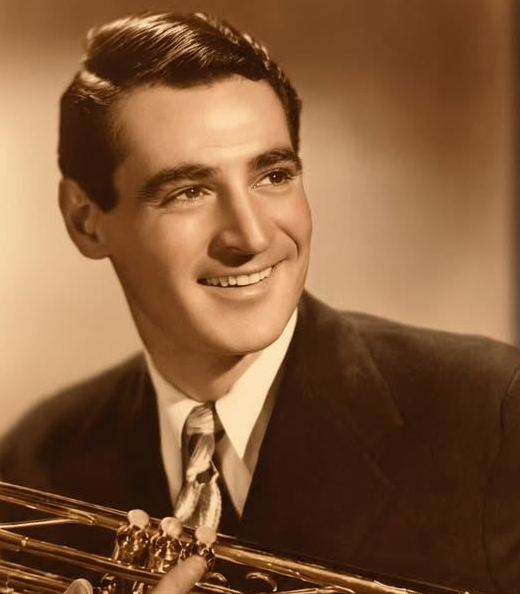
Among the most astonishing is Ray Anthony, who at 103 stands as one of the oldest living stars of American entertainment. A symbol of the big band era, Anthony’s life traces a direct line to nights when swing music defined romance, rebellion, and national mood. His trumpet once filled ballrooms and radio waves, carrying optimism through uncertain decades. That he remains a living presence today feels almost mythic, as if a forgotten rhythm has refused to fade. Each note he plays is not merely music—it is testimony, a reminder that history can resonate, quite literally, in the present. Interviews with Anthony reveal a sharp wit, a love of humor, and a clarity of mind that belies the century he has lived. He has seen society transform multiple times, yet retains the vitality to engage with it fully, whether through concerts, recordings, or mentoring younger musicians.
Equally extraordinary is Elizabeth Waldo, born in 1918, whose work has preserved indigenous music that might otherwise have vanished entirely. While Hollywood often celebrates spectacle, Waldo dedicated her life to memory—traveling, recording, and safeguarding cultural sounds long before preservation became fashionable. Her longevity is not just physical; it is archival. Through her, entire musical traditions still breathe, their nuances and complexities preserved for generations who may never have witnessed them firsthand. She has become a conduit between eras, a living bridge that ensures cultural legacies are not lost to the accelerating pace of global change.
Then there is Karen Marsh Doll, a rare living bridge to Hollywood’s golden age. Her memories stretch back to the original studio system, to sets that produced films like The Wizard of Oz and Gone with the Wind. She stands as one of the last firsthand witnesses to an era that modern Hollywood references endlessly but can never fully recreate. Through her stories, history remains textured and human rather than mythologized. She recalls the day-to-day lives on set, the camaraderie and rivalries, and the trials of an industry that demanded perfection while offering little compassion. Her recollections have become a resource for historians, journalists, and filmmakers, grounding myth in lived experience.
Around them orbits a constellation of icons who continue to defy cultural expiration dates. June Lockhart, Eva Marie Saint, and Dick Van Dyke remain symbols of warmth, wit, and creative endurance. Van Dyke, in particular, has become something of a modern marvel—dancing, speaking publicly, and reminding audiences that joy itself can be a form of longevity. These figures demonstrate that creativity is not constrained by the calendar. They are active, engaged, and visibly present, inspiring audiences to rethink the boundaries of what it means to grow older.
Creativity has not dimmed for figures many assumed would long ago retreat from public life. Mel Brooks continues to influence comedy and mentor younger creators, proving that satire sharpens rather than dulls with age. William Shatner remains culturally omnipresent, his voice and persona evolving across decades without losing relevance. Barbara Eden still embodies the charm of television’s formative years while engaging new generations of fans. These individuals show that influence is cumulative—it grows with experience, observation, and persistence. They are not chasing attention; they are curating it, shaping their legacies on their own terms.
In cinema, artistry itself seems immune to retirement. Clint Eastwood, Sophia Loren, and Michael Caine demonstrate that craft does not diminish—it refines. Their later works are not echoes of past glory, but distilled expressions of decades of experience. Each performance carries the gravity of a lifetime spent observing human nature from every angle. Beyond technique, there is wisdom embedded in their choices—what to omit, what to emphasize, and how to convey subtlety where younger actors might overplay. Their art is a meditation on time itself.
Others carry their influence beyond performance alone. Julie Andrews, Shirley MacLaine, Al Pacino, and Jane Fonda continue to merge craft with conviction. Their activism, mentorship, and cultural commentary remind younger generations that relevance is not granted by youth, but earned through courage and persistence. In their public statements, interviews, and philanthropic work, they model a version of success that encompasses integrity, social consciousness, and artistic commitment. They remind us that true impact often lies outside the spotlight, in choices, collaborations, and guidance offered to others.
What unites these figures is not nostalgia, but continuity. They are living archives—embodied history that cannot be digitized or replaced. Each one carries stories of lost collaborators, vanished studios, and cultural battles won and lost. Behind their smiles lie private griefs, battles with illness, professional exile, and moments when the world seemed ready to move on without them. That they endured is not accidental. Longevity, in this context, is an act of resistance. Every interview, every appearance, every note played or line delivered is a declaration: the past is not done with us, and neither are we with it.
Hollywood often sells reinvention as a young person’s game. These legends prove otherwise. They reinvented themselves not once, but repeatedly—across radio, film, television, streaming, and global media landscapes. They adapted not by chasing trends, but by deepening authenticity. In an industry obsessed with immediacy, they mastered endurance. They show that reinvention is not about novelty, but about integrity, observation, and courage. It is a discipline, a philosophy, and a lifestyle.
Their presence challenges a culture that equates age with irrelevance. They remind audiences that wisdom compounds, that perspective sharpens, and that time can be a collaborator rather than an enemy. When they speak, they do not compete with the present—they contextualize it. When they create, they do not imitate youth—they offer something rarer: depth, nuance, and resonance that only decades of lived experience can provide. They provide continuity, history, and a mirror for audiences to reflect on change, memory, and evolution in culture.
At nearly 103, and beyond, these living stars stand as quiet contradictions to a disposable culture. They are proof that artistry does not expire, that memory has value, and that time does not always get the final word. In a world racing forward, they remain—still shining, still teaching, still reminding us that some lights are not meant to burn out at all. They are living monuments, not to the past, but to the enduring possibilities of human creativity, courage, and the profound rewards of staying present, engaged, and unafraid of time.