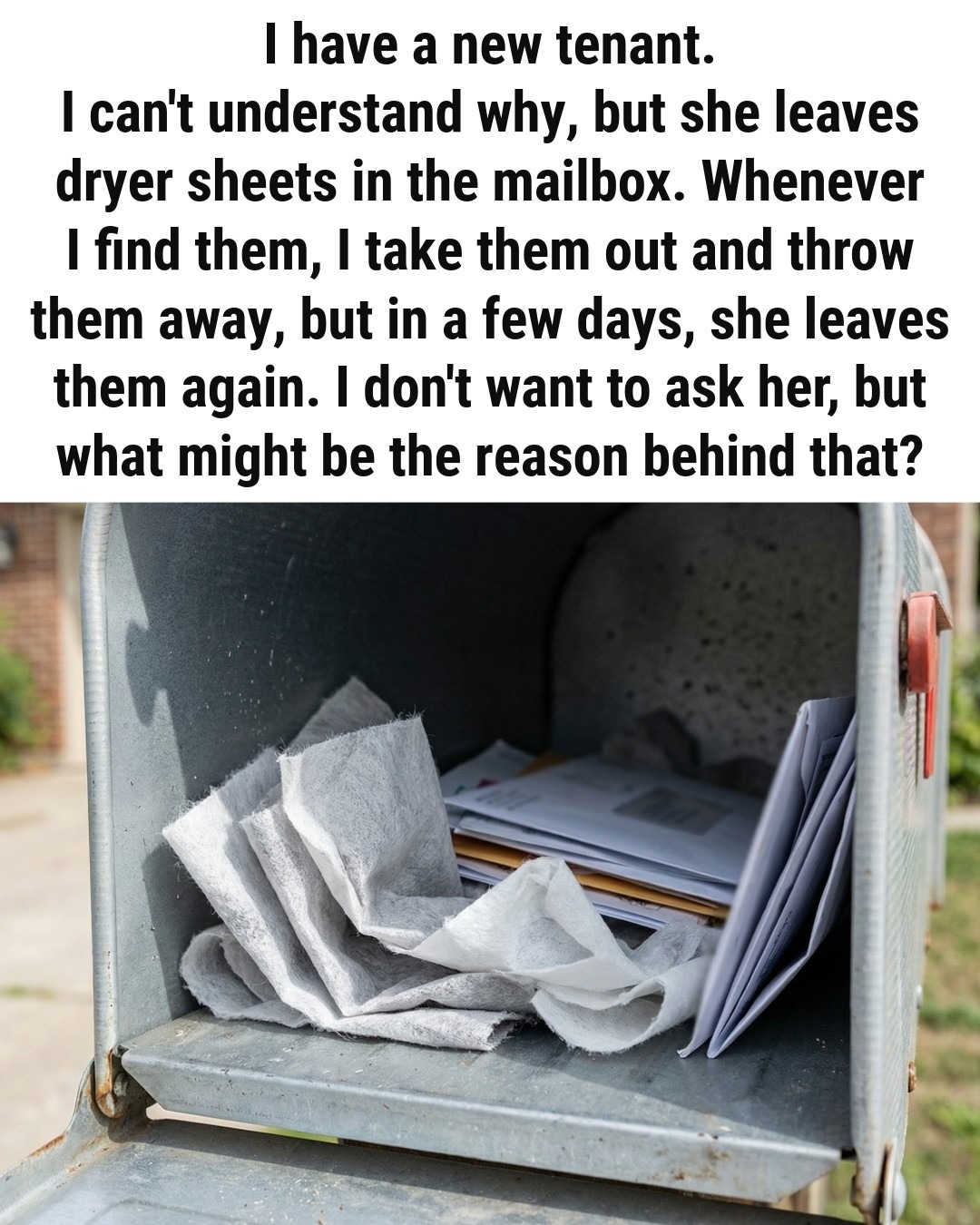
At first, it may seem odd to see a dryer sheet hidden within your mailbox. It’s unanticipated, simple to misunderstand, and frequently written off as litter or a minor error. But most of the time, that little, delicately fragrant square serves a very precise purpose, and knowing why can help keep you, your loved ones, and the individuals who deliver your mail every day safe.
Fragrances and naturally occurring chemicals like linalool and benzyl acetate are added to dryer sheets like Bounce and Snuggle. Although these substances are intended to soften textiles and lessen static, many insects, particularly wasps and bees, find them extremely disagreeable. These smells obstruct insects’ ability to communicate, navigate, and assess if an area is suitable for breeding. The stench is a warning indicator for them.
Unfortunately, stinging insects find a mailbox to be nearly ideal real estate. It is enclosed, protected from wind and rain, warm during the day, and seldom disturbed for extended periods of time. Wasps aggressively seek for these conditions in the late spring and summer. A nest can expand rapidly once it begins to form inside a mailbox, and it can also become hostile very soon.
The dryer sheet is useful in this situation.
Dryer sheets have been discreetly utilized as a straightforward deterrent by postal workers and homeowners for years. Although it’s not a foolproof solution, it frequently does a good enough job of keeping insects from building nests or from coming back. The method’s popularity stems from its practicality rather than its ostentation or governmental promotion. It is widely accessible, affordable, non-toxic, and doesn’t expose people, animals, or mail to dangerous chemicals.
It virtually never happens at random when a dryer sheet shows up in your mailbox. It usually indicates one of three things. It’s possible that your mail courier is taking precautions to avoid getting stung. They might have seen early indications of insect activity in the area. Alternatively, they can be subtly warning you to check your mailbox before things get out of hand.
It’s not a joke. It’s not negligence. It is a nuanced kind of communication based on respect and safety.
Each day, hundreds of mailboxes are opened by mail carriers. In a matter of seconds, an everyday path might become a medical disaster due to a hidden wasp nest, particularly for those who have allergies. Carriers are not allowed to decide how or when to open a mailbox, unlike homeowners. They frequently have to reach inside without visibility and do it swiftly and repeatedly. They receive a tiny but significant layer of protection from a dryer sheet.
Don’t immediately take one out of your mailbox if you find one. To allow it to continue performing its function, leave it in place for a few days. After that, give the mailbox a thorough inspection. Check for papery nest material, listen for buzzing, and observe insects coming in or going out from a distance. The ideal times to see wasps are in the early morning or late evening, when they are less active and simpler to identify without upsetting them.
Refrain from using pesticides yourself if you discover a nest, particularly if the mailbox is close to a road or shared by several homes. Spraying can excite the insects and put delivery personnel and passing cars at risk. In many situations, you can get advice on safe nest removal methods from your local post office or get in touch with a certified pest management specialist.
Wiping down the inside of your mailbox once a month during the warmer months might help minimize insect-attracting lingering aromas. During peak wasp season, which usually lasts from late spring to early fall, many individuals also decide to put a fresh dryer sheet inside. It’s a tiny action that can stop a much bigger issue.
Additionally, there are a few crucial things to avoid. Don’t disregard the dryer sheet or think it has no significance. Mothballs and powerful chemical repellents are hazardous and can harm mail, so avoid using them. Additionally, avoid blocking or altering your mailbox in a way that makes access challenging—mail carriers need easy, secure access to perform their duties.
The quietness and humanity of this practice are what stand out the most. No notice, no sign, no conflict. A modest act to ensure everyone’s safety. It illustrates a type of commonplace collaboration that is frequently overlooked—people watching out for one another without asking for gratitude.
Extreme weather, wild dogs, uneven steps, traffic, and insects lurking in areas they must blindly reach into are just a few of the risks that mail carriers confront that most of us hardly consider. One of the easiest methods to lower danger while still honoring your property and personal space is to use a dryer sheet.
This is different in a society where safety advice is frequently accompanied with dread or panic. It is composed, realistic, and based on shared accountability. “Danger” is not written on the tiny sheet. “Pay attention,” it reads.
Big gestures and loud statements aren’t necessarily the best strategies to foster community. Sometimes it’s developed by simple, considerate gestures that subtly convey, “I’m trying to keep us both safe,” like placing a dryer sheet in a mailbox.
Take it seriously the next time you discover one hidden inside. Not with fear, but with consciousness. Check your mailbox, leave it there, and know that someone on your regular route is contributing.
And perhaps you’ll do yours in exchange.