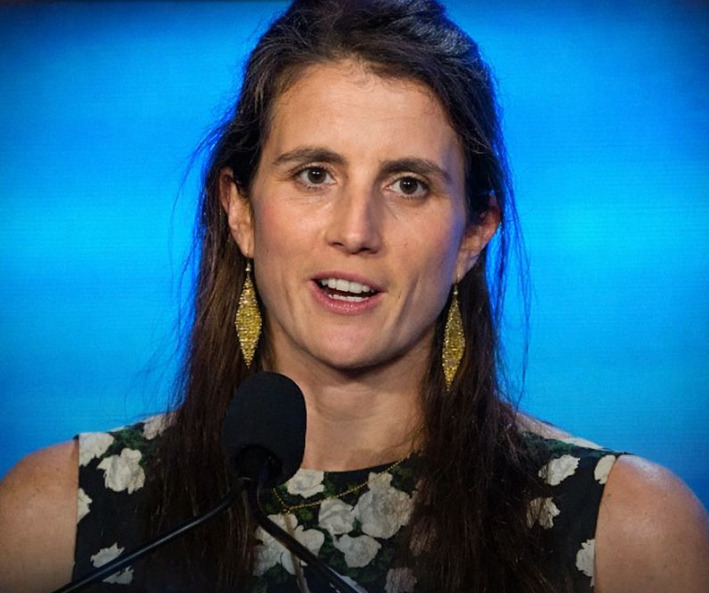
A young mother. A dying daughter. A family already fractured by a long history of American tragedy. Tatiana Schlossberg’s final year unfolded as a race against a clock she understood with painful clarity—a countdown with no possibility of pause or reversal. From the moment she learned her illness would not be cured, time stopped behaving like something abstract and became instead a physical presence, pressing in on every hour, every conversation, every ordinary moment she suddenly saw as precious. Between chemotherapy appointments and bedtime rituals, she lived inside that tension: fighting to stay alive while preparing, quietly and deliberately, for the certainty that she would not.
Her days were divided between hospital corridors and the intimate geography of home. Sterile rooms filled with machines, IV poles, and hushed voices contrasted sharply with children’s bedrooms scattered with toys, soft blankets, and the gentle chaos of young life. She tried to be fully present in both worlds. In the hospital, she endured treatments that drained her strength and blurred her sense of time. At home, she summoned what energy she had left to read stories, sing songs, and hold her children close. She memorized details with an intensity that surprised even her—how her son’s smile curved when he laughed, the warmth of her infant daughter’s small hand resting against her chest, the sound of their breathing when they finally fell asleep. These were not casual observations. They were acts of preservation.
Tatiana wrote during this time, not to explain herself to the world, but to anchor herself to it. Her essays read like messages sent from the edge of something vast and unknowable. In them, she spoke with disarming honesty about fear, love, and regret. What frightened her most was not the idea of death itself, but the possibility of erasure—of becoming a fading outline in the memories of the people she loved most. She worried about how quickly children grow, how easily moments blur, and how fragile remembrance can be when time moves forward without you. Writing became her way of pushing back against that fear, of leaving behind something solid enough to be held.
All of this unfolded under the long shadow of the Kennedy legacy, a family history so often marked by loss that it has come to feel almost mythic. Around her, grief was not new. It was inherited. Her mother had already buried both a husband and a brother, losses that reshaped her life and identity. Now she faced the unthinkable once again: preparing to outlive her own child. The weight of that reality hovered over every gathering, every quiet exchange, every look that lingered a second too long. The past pressed against the present, reminding everyone involved that this family had been here before, too many times.
Yet Tatiana resisted being defined solely by that lineage of sorrow. She refused to be reduced to another tragic footnote in a story the public thought it already understood. She wanted to be remembered on her own terms—not just as someone who died young, but as someone who lived with intention. She was a writer who believed in the power of words to shape understanding. She was an environmentalist who cared deeply about the future of a planet her children would inherit without her. She was a woman who tried, even as her body failed her, to protect what she loved: her family, her values, and the fragile systems that sustain life.
As her illness progressed, the boundaries between past, present, and future began to blur. She thought often about what her children would know of her years from now. Would they remember her voice? Her laugh? The way she looked at them with a mixture of awe and fierce devotion? She understood that memory is not guaranteed; it must be tended, revisited, and reinforced. Through her writing, through the stories others would tell, she hoped to remain more than a photograph or a name. She hoped to remain a presence.
In the end, her life became what she feared her children might lose forever: a memory strong enough to endure absence. Not a perfect memory, not a frozen one, but a living reminder of love, effort, and care. Tatiana Schlossberg’s final year was not only a period of decline; it was also a period of remarkable clarity. She showed that even when time is brutally limited, meaning can still expand. And in choosing how she would be remembered, she transformed loss into something quieter but more lasting—a legacy shaped not just by tragedy, but by intention.