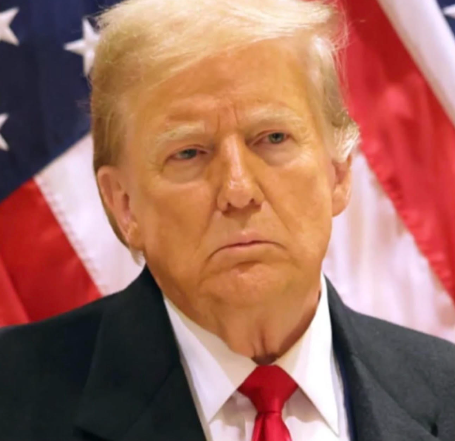
Trump’s latest primetime address did more than inflame political divisions—it triggered a wave of unease that extended far beyond policy debates. As the speech aired, social media lit up not only with arguments over immigration, security, and power, but with something more unsettling. Viewers weren’t just reacting to what Donald Trump said. They were fixated on how he said it. His delivery, posture, and pacing sparked whispered concerns that quickly grew into a louder, more serious conversation about the former president’s condition and composure under pressure.
Almost immediately after the address, those concerns gained unexpected credibility when a prominent cardiologist went on live television and voiced alarm. Dr. Jonathan Reiner, a professor of medicine at George Washington University and a longtime commentator on presidential health, said he was “seriously concerned” by what he observed. For him, the speech was not a political event—it was a clinical one. He watched it not as a voter or critic, but as a physician trained to recognize patterns that can signal deeper issues.
Reiner explained that during the 20-minute address, Trump’s speech patterns stood out in a way he found troubling. His voice was elevated, his sentences rushed, and his cadence unusually compressed. Reiner described it as sounding like a recording played at double speed—relentless, breathless, and erratic. For an individual seeking or holding the nation’s highest office, he said, that kind of delivery raised red flags. It conveyed not command or confidence, but pressure and agitation, suggesting a lack of internal regulation rather than controlled urgency.
What unsettled Reiner most was not just the intensity, but the contrast. According to him, the speech fit into a broader pattern that has been emerging over time. He referenced repeated reports—some from journalists, others from insiders—claiming that Trump has been seen dozing off during meetings, including in the Oval Office and during cabinet briefings. Reiner referred to this as “increased daytime somnolence,” a phrase used clinically to describe abnormal levels of daytime sleepiness.
While Reiner was careful not to diagnose, he emphasized that such swings—from apparent fatigue or near-sleep to bursts of frantic energy—are not meaningless. In a public leader, he argued, these extremes deserve explanation, not dismissal. He noted that conditions such as untreated sleep disorders are common, manageable, and not shameful—but they require acknowledgment and treatment. The concern, he stressed, lies not in the possibility of a condition, but in the absence of transparency.
The White House, for its part, has consistently minimized or brushed aside questions related to Trump’s physical appearance and stamina. Reports of swollen ankles, visible bruising on his hands, or changes in posture have been waved off as inconsequential or misinterpreted. But Reiner pushed back on that approach, arguing that the American public has a legitimate interest in the health of someone wielding enormous power. In his view, secrecy only fuels speculation and erodes trust.
“This isn’t about politics,” Reiner said in essence. “It’s about governance.” A president’s ability to manage stress, maintain focus, and operate consistently under pressure is not a private matter—it is a national concern. When the public observes extremes in behavior, especially when paired with a lack of clear medical communication, anxiety fills the vacuum.
The reaction to Reiner’s comments was swift and polarized. Supporters accused him of politicizing medicine. Critics argued he was saying what many Americans had already noticed but were hesitant to voice. What both sides acknowledged, however, was that the conversation had shifted. The speech was no longer just another controversial address. It had become a flashpoint in a broader debate about fitness for leadership, transparency, and the standards applied to those who seek the presidency.
Ultimately, the episode underscored a deeper reality about modern politics: leadership is no longer evaluated solely by words or ideology. Behavior, stamina, and perceived stability are now scrutinized in real time by millions of viewers armed with replay buttons and social media platforms. When a medical professional publicly raises concerns—even cautiously—it amplifies that scrutiny.
Whether Trump’s delivery reflects stress, style, or something else entirely remains officially unanswered. But for many who watched that night, the lingering impression wasn’t outrage or applause. It was unease. And as Dr. Reiner suggested, when signs appear repeatedly and in plain sight, ignoring them may be the most dangerous response of all.