The email sat unopened on my screen, its subject line tugging at me insistently: “Regarding the incident outside the grocery store.” I froze for a moment, staring at it, feeling an unexpected tightening in my chest. I lived directly above that store, in an apartment that had once been quiet, predictable, and safe. And yet, nothing I could remember had ever warranted such a subject line. Around me, the familiar objects of my life—my children’s shoes lined up neatly by the door, Nathan’s jacket still hanging on its hook, the faint scent of morning coffee lingering on the counter—reminded me that life continued, even when it felt fragile. That small decision I’d made days earlier, a gesture I had thought trivial, now echoed back with a weight I hadn’t anticipated. Since Nathan passed away, life had become a careful routine, a choreography built around my two children, their needs, their schedules, and the quiet endurance that came from learning to live without him. Yet even in that structured life, moments like this reminded me how quickly the ordinary can turn extraordinary.
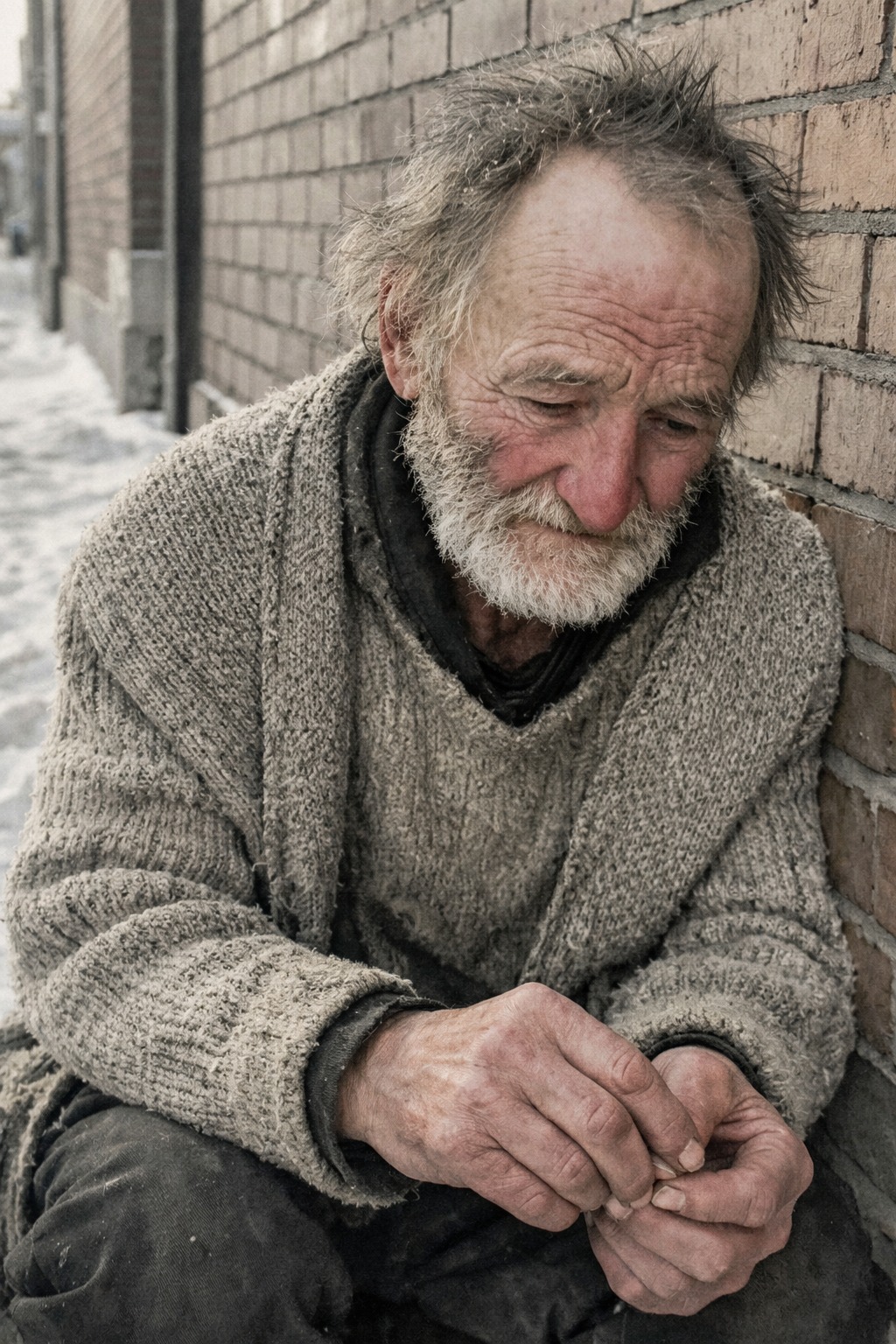
Grief lingered in the corners of the apartment, unspoken but ever-present, much like Nathan’s jacket. Sometimes it was worn by my son, who liked the way it smelled of his father. Sometimes it was hugged by my daughter, who found comfort in the familiar fabric that carried the memory of him. One particularly cold morning, I was heading downstairs to run errands when I noticed an older man sitting on the bench outside the grocery entrance. His hands trembled from the biting wind, his breath visible in the icy air. Something about his presence pulled at me—not fear, not suspicion, just an instinctive sense that he needed something. He spoke quietly, his voice carrying a note of humility that immediately drew my attention. He said he was a veteran and asked for spare change. Instead of brushing past, I paused, thinking only briefly before heading back upstairs. I retrieved Nathan’s jacket and returned it to him, offering warmth without a second thought. At the time, it felt like a simple, human act, a small ripple of kindness in a cold morning. I didn’t realize then that ripples, no matter how quiet, can travel far beyond our immediate awareness.
It was only when the email arrived that I fully understood the reach of that small gesture. Building management wanted “clarification” about the interaction, and my heart sank with worry—had I done something wrong? Was there trouble I hadn’t foreseen? Their message, however, was reassuring. The man was safe, they explained, and he had requested they pass along his thanks. Relief softened the tight knot in my chest, but it was the next detail that truly stopped me: he recognized the jacket because he had once served with Nathan. In that moment, the apartment, the jacket, and the memory of my husband all converged into a single, poignant realization. The next afternoon, the man returned, carrying the jacket folded neatly in his arms. He had found help through a veterans’ shelter and wanted to return it properly, his eyes reflecting gratitude, humility, and the quiet acknowledgment of something larger than either of us had imagined.
Before leaving, he shared a story—how Nathan had once helped him, long ago, quietly and without recognition, a kindness that had stayed with him through years of hardship. I listened, speechless, as the weight of memory and connection settled in the room. That night, when I hung the jacket back on its hook, my children gathered around it, curious and reverent. I finally understood, in a way that words cannot fully capture, that kindness doesn’t disappear. It moves quietly, invisibly, carrying with it the echoes of those who gave it and touching lives in ways we may never fully comprehend. It connects us, threads through time and space, and sometimes returns unexpectedly, carrying fragments of the people we love and the legacy they leave behind. In that moment, the apartment felt alive with memory, gratitude, and the quiet truth that every act of care matters, even the smallest ones.