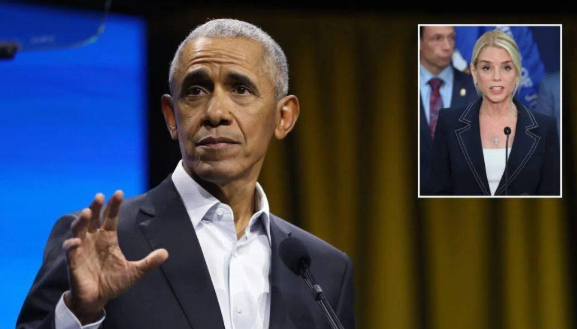
Following disclosures about the financial channels the Obama Foundation employed, the relationship between political legacy and financial transparency has come under close examination. A $2 million transfer made through the Tides Foundation is at the heart of the dispute; this action has sparked a heated national discussion about the “distance-by-design” character of progressive giving. Officially, the funds were intended for admirable projects like “combating surging summer violence” and “creating safe spaces” for urban youth, but their real trajectory has drawn investigators into a convoluted network of ideologically motivated organizations that are currently the focus of a contentious congressional investigation.
Being a “fiscal sponsor,” the Tides Foundation is able to act as a huge clearinghouse for donations to charities. According to this strategy, Tides can get funding from major institutions like the Obama Foundation, which it then uses to fund smaller, community-based initiatives. Proponents of this system contend that it is an essential tool that gives IRS status and administrative assistance to small-scale community organizers who are unable to handle their own non-profit compliance. Critics, however, see it as a sophisticated “dark money” engine—a financial maze created to give prominent donors credible deniability while their funds support extremist causes that are far from the mainstream.
The downstream beneficiaries of the networks funded by Tides are the subject of the present congressional investigation. Investigators are specifically looking into how these contributions might have indirectly aided groups that have been charged with praising or justifying Hamas’s activities in the wake of the October 7 assaults. There are also claims that these financial networks were crucial in setting up and maintaining the campus encampments that swept through American colleges in 2024 and 2025. What started out as anti-Israel agitation often turned into overt antisemitism, resulting in a hostile atmosphere on prestigious universities and an Ivy League leadership crisis.
The risks to the Obama Foundation’s reputation are substantial. The foundation is expected to uphold the highest standards of screening and moral clarity because it is the charitable arm of a former president’s legacy. The organization successfully created a barrier between its brand and the $2 million’s ultimate destination by using the Tides Foundation as an intermediary. With this arrangement, donors can take credit for the general, charitable objectives of the main gift, including youth safety, while being legally protected from the fallout if the funds are later used to fund organizations that advocate for civil unrest or use antisemitic speech.
It is no longer just technical tax law compliance that is at the center of the dispute. Legal bundling, a technique that enables Tides and its affiliated groups to pool funds from multiple sources and reroute them to dozens of “pop-up” projects with minimal to no direct public reporting obligations, is something they are experts at. The moral and political ramifications are significantly more detrimental, even though this might be perfectly lawful under the IRS’s present laws. The public is beginning to question if elite institutions are ethically accountable for the long-term effects of the financial ecosystems they choose to support as antisemitic events rise across.
“Safe spaces” and “violence prevention,” according to critics, are frequently employed as linguistic cover for radicalization. Groups supported by the Tides network have been accused on multiple occasions of utilizing community outreach as a vehicle for brainwashing against Zionism and the West. The initial funding for these networks comes from a former president’s foundation, which gives the entire chain of command a sense of institutional legitimacy. Opponents are framing the Obama Foundation’s decision to use a channel renowned for funding extreme fringe groups as a purposeful act of political signaling, even if the organization did not specifically aim for its funds to reach campus agitators.
The goal of the congressional study is to dissect these fiscal sponsorships and “donor-advised funds.” The American public has a right to know whether charitable tax deductions are being exploited to promote foreign-aligned interests or weaken national social cohesiveness, according to lawmakers who are calling for more open reporting on the flow of funds through these centers. The so-called “murky world of progressive philanthropy” depends on the absence of sunshine to function. The investigation seeks to force a reckoning inside the non-profit sector by revealing the connections between a prestigious foundation and contentious college movements.
This dispute draws attention to a widening divide in American philanthropy. Some argue that foundations should be allowed to support any organization they want without worrying about “reputational blowback.” They contend that the Tides approach permits social justice experiments while safeguarding donors’ privacy. Some, on the other hand, think that democratic accountability is in danger because of the lack of openness. They contend that the “donor-advised” shield turns becomes a tool for subversion rather than charity when billions of dollars pass via “black box” foundations to affect American politics and society.
For many who are critical of the Obama legacy, the $2 million donation has become a powerful emblem as the 2025 political cycle heats up. It acts as a focal point for more general annoyances about the power of “Soros-linked” organizations and the alleged radicalization of the Democratic Party’s supporter base. The fact of contemporary political finance is that money is fungible, notwithstanding the Obama Foundation’s insistence that its goals were solely focused on domestic youth safety. Giving a dollar to a large network like Tides frees up another $1 for less “safe” and more contentious projects.
In the end, the millions of people who were steered are a tale of institutional distrust. The perception that these organizations are working for the greater good is damaged when the public discovers that a former leader’s foundation is connected, even if only loosely, to organizations that support terrorism or inflame ethnic tensions on campus. Although the “distance-by-design” approach may have served to safeguard the foundation in the past, the barriers are starting to come down in an era of more political consciousness and digital openness. Today, the 44th president’s legacy is linked to a financial network that has to answer for its part in the changing, frequently unstable terrain of social activity in the United States.
The Obama Foundation will probably have to decide whether to keep using opaque fiscal sponsors or switch to more direct, transparent grant-making. Until then, the $2 million transfer continues to serve as a striking illustration of how elite philanthropy can unintentionally—or perhaps purposefully—stoke the exact fires it purports to be putting out. The American public must now determine who is really responsible for the financial connection between the radical Ivy League encampments and the safe havens of the inner city.