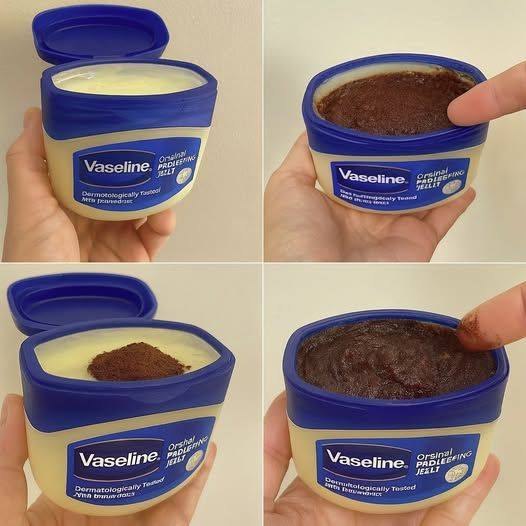
In the world of home skincare, few DIY remedies are as popular—and as often misunderstood—as the combination of coffee grounds and petroleum jelly. Commonly found in kitchens and medicine cabinets, these two ingredients are frequently blended into a homemade body scrub. While the appeal lies in its simplicity, its effectiveness depends on understanding the science of the skin. Together, coffee and Vaseline form a two-part system: one ingredient exfoliates, the other protects. To use this duo safely and effectively, it’s important to balance thorough exfoliation with adequate moisture retention.
Coffee grounds serve as the mechanical exfoliant in this mixture. Unlike chemical exfoliants that rely on acids to loosen dead skin cells, coffee physically scrubs away the outer layer of rough tissue. This is particularly useful on tougher areas like elbows, knees, and heels, where thickened skin often accumulates. Gentle massaging with coffee grounds removes this buildup, stimulates circulation, and reveals smoother, more vibrant skin beneath. Additionally, the natural antioxidants and oils in coffee can offer a temporary refreshing effect.
However, exfoliation is essentially controlled damage to the skin’s surface. This is where Vaseline, a refined petroleum jelly, becomes essential. As an occlusive moisturizer, Vaseline forms a protective barrier over the skin. Unlike humectants that draw water in or emollients that fill gaps between cells, occlusives lock in existing moisture. Applying Vaseline after exfoliating helps preserve hydration, maintain the smoothness achieved by the coffee scrub, and protect the skin from environmental stressors like dry air or harsh cleansers.
Despite its benefits, this scrub isn’t suitable for every part of the body. Coffee grounds are too abrasive for delicate facial skin. Using the mixture on the face can cause micro-tears, leading to redness, inflammation, or even infection. Additionally, claims that caffeine permanently eliminates cellulite or tightens skin are exaggerated. While caffeine may temporarily constrict blood vessels, creating a short-lived “depuffing” effect, it does not replace consistent skincare or healthy lifestyle habits.
Hygiene is also critical when working with Vaseline. Its occlusive nature can trap sweat, dirt, and bacteria if the skin isn’t properly cleaned beforehand, increasing the risk of breakouts or folliculitis. There’s also the practical issue of mess: coffee grounds can stain tiles, and Vaseline’s greasy texture makes it tricky to wash off completely, which could even create slippery surfaces in the shower.
For those wishing to try this scrub, a careful approach is recommended. Brewed and cooled coffee grounds are slightly softer and less abrasive than fresh grounds. Mix a small amount of Vaseline with the coffee to form a thick paste. Apply it at the end of a warm shower when the skin is damp and pores are open. Massage gently in circular motions for about one minute per area. Using a washcloth while rinsing helps remove both the coffee and the greasy residue.
Frequency is just as important as consistency. Over-exfoliating can strip natural oils, causing dryness and sensitivity. Once a week—or even every two weeks in winter—is generally enough. For sensitive skin or facial areas, gentler alternatives like finely ground oatmeal or commercially formulated scrubs with uniform beads are safer options.
Ultimately, the coffee and Vaseline scrub works best as a targeted solution for rough, stubborn patches of skin rather than as a full-body skincare routine. While it can rejuvenate feet, elbows, and other tough areas, overall skin health depends on fundamentals: a balanced diet, proper hydration, sun protection, and suitable moisturizers. This DIY remedy is an effective and budget-friendly addition for managing dry spots, but it should be used with care and awareness of your skin’s limits.