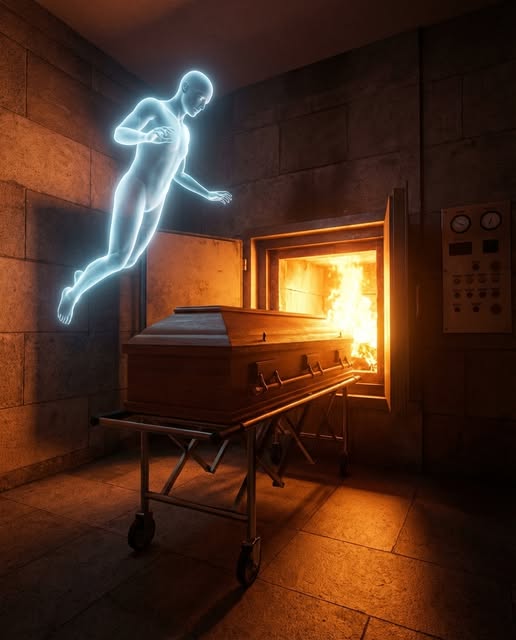
The question no one wants to ask sits in the back of the mind: what happens to faith when the body meets the flame? As cremation quietly replaces the coffin, unease rises. Is something sacred being lost—or misunderstood? Generations raised on burial now wrestle with Scripture, symbol, and fear, wondering if a single choice can alter eternity.
This silent, unsettling question lingers for many, rarely voiced aloud but felt deeply in moments of loss or planning. The rise of cremation in modern society has introduced a new current of uncertainty, unsettling the traditions that have defined Christian practice for centuries. In countless families, the old rituals of burial—the procession, the shoveling of earth, the headstone to mark a life—are giving way to a quieter, often more anonymous process. Ashes collected in urns, scattered in gardens, or kept on mantels replace the familiar image of a body returning to the earth. For many, this shift is not simply practical or economic; it raises profound spiritual questions.
Is something essential being given up when the body is consumed by fire rather than gently laid to rest in soil? Is the very act of cremation a misunderstanding of the sacred trust placed in the body as God’s creation? For those shaped by generations of burial rites, these concerns touch on the deepest anxieties about life, death, and what comes after. Scripture, deeply rooted cultural symbols, and even unconscious fears become entangled, as if the method of laying a loved one to rest could somehow influence the soul’s fate or the fulfillment of God’s promises.
Throughout Christian history, burial has held a unique and cherished symbolism. The stories of Abraham purchasing a tomb for Sarah, of patriarchs laid to rest in expectation of God’s future, and—most significantly—of Jesus’ own burial and resurrection, have all shaped how believers think about death and hope. The act of returning the body to the earth is often seen as an act of reverence and hope, a gesture that trusts in the possibility of new life. For centuries, this has been imagined as planting a seed: just as a seed is buried in the ground and emerges transformed, so too will those who die rise again in a new creation. This imagery connects the physical reality of the body—its dust and decay—to the ultimate promise of resurrection and renewal.
The burial rites practiced by Christians are not mere formalities; they are acts of faith, woven into the fabric of hope that death is not the end. Gravesites become places of memory and pilgrimage, symbols of waiting and anticipation for the world to be made new. The dust of the body is linked to the dust from which humanity was formed and to the conviction that God’s creative power is not exhausted by death.
Yet, at the heart of Christian belief, the hope of resurrection does not rest on the specific condition or location of the body. Christian history is full of stories of believers who died in circumstances far from the peace of a family grave—lost at sea, consumed by fire, fallen in battle, or buried in unmarked and forgotten places. Sacred texts never suggest that God’s ability to redeem and restore is limited by human control or by what happens to physical remains. Instead, they affirm that God’s promise transcends the boundaries of time, place, and circumstance.
What matters, ultimately, is not whether a body is gently placed in the earth or reduced to ashes. The true center of Christian hope is not found in the mechanics of burial or cremation, but in the posture of the heart. Faith, love, conscience, and trust in God’s promise are what guide the believer’s choices and give meaning to the rituals of death. When families make decisions shaped by care, honor, and a desire to act faithfully, they participate in a tradition that is larger than any single method of farewell.
In an age where cremation is becoming more common, Christians are invited to reflect on what truly lies at the core of their hope. Is it the preservation of a particular custom, or the assurance that God is present and powerful, no matter the circumstances? The shift from burial to cremation can be an occasion for renewed trust—not in the method, but in the promise that nothing is lost to God. Whether the body returns to dust through decay or flame, the love and power of God remain unchanged.
As new generations navigate these choices, questions of conscience, tradition, and faith will continue to arise. But Christians can approach death, in whatever form, with a quiet, unwavering hope, confident that the God who raised Jesus from the dead is not bound by our limits. The method of burial is a matter of custom; the promise of resurrection is a matter of unshakeable faith.