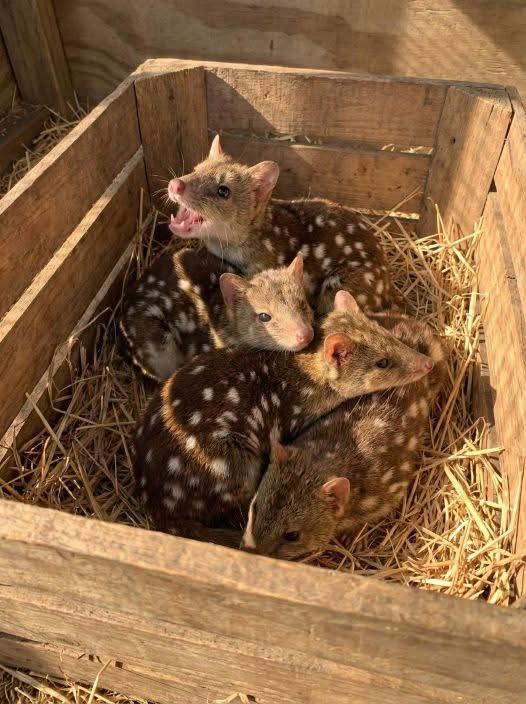
New life has erupted in a place that was once considered silent and forgotten, transforming Mt Gibson Wildlife Sanctuary into a stage for one of Australia’s most remarkable conservation stories. Tiny, spike-furred hunters, long thought to be on the verge of complete disappearance, have emerged from the brink of oblivion, defying decades—almost a century—of decline. Scientists and conservationists alike are watching in awe as a species that Australia seemed to have almost written off makes a dramatic return, claws sharp and eyes bright with the instinct to survive. The sight of the first fragile litter navigating a world still filled with dangers—traps, poisons, and predatory invaders—raises an urgent question: is this recovery a true miracle, or the beginning of a precarious battle for survival that is far from over?
In the red, dusty expanses of Mt Gibson, the tiny western quoll joeys are more than just a symbol of scientific success; they are a bold answer to the shadow of extinction. Every soft growl, every tentative step, and every curious glance demonstrates that careful human intervention—through reintroduction programs, predator management, and habitat restoration—can succeed where previous efforts faltered. These small creatures, with their sharp instincts and spiny coats, are reclaiming a place that had almost forgotten them, proving that determination and careful planning can yield extraordinary results in the fight against extinction.
Ecologist Georgina Anderson and her dedicated team now follow these nocturnal hunters with a mixture of reverence and cautious excitement. Each night, they track the quolls as they emerge from burrows, scavenge for food, and care for their young in a landscape that had long been inhospitable to their survival. Observing these tiny predators learning to navigate a world shaped by human activity is both thrilling and sobering, as their continued survival is far from guaranteed. Feral cats and foxes, alongside unpredictable climate extremes, continue to threaten the sanctuary’s borders, testing the resilience of this reintroduced population.
Yet, the successful emergence of this litter offers hope, showing that when wildlife is given a safe space and active protection, even species teetering on the edge of extinction can mount a comeback. For Australia, the return of the western quoll is not merely a local success story—it is a powerful reminder that the narratives of lost wildlife do not have to end in silence. Every careful step these tiny predators take, every playful tumble, and every bright-eyed gaze is a testament to the possibility of renewal. It signals that extinction is not always final and that human stewardship, when guided by knowledge and dedication, can create opportunities for life to flourish again.
The journey of these quolls also serves as an educational story for broader conservation efforts. They demonstrate the intricate balance required to protect wildlife: the need to manage invasive species, restore natural habitats, and monitor populations closely while allowing animals the freedom to behave naturally. For the scientists at Mt Gibson, each day brings new challenges and small victories as they witness the quolls establish burrows, hunt, and eventually raise their own young. The narrative unfolding here is one of resilience, adaptation, and hope, a clear example that strategic, sustained conservation work can make a tangible difference in reversing the decline of species once considered lost forever.
As the western quolls grow stronger and explore further, their presence is reshaping the ecological story of Mt Gibson. They influence prey populations, interact with other wildlife, and slowly reintegrate a missing piece into the Australian wilderness. Their tiny footprints mark the path not only of their own survival but also of the possibilities that exist when humans take an active role in repairing the damage done to ecosystems over centuries.
Ultimately, the quolls’ return is more than a single-species success; it represents the hope that lost ecosystems can be revived, that extinction is not always inevitable, and that the careful stewardship of wildlife can result in astonishing, tangible outcomes. The red dust, the sharp claws, and the bright, unblinking eyes of the young quolls remind everyone watching that conservation is a fight worth fighting, and that even the smallest creatures can carry the largest lessons about resilience, survival, and the enduring power of life in a world that often seems indifferent.