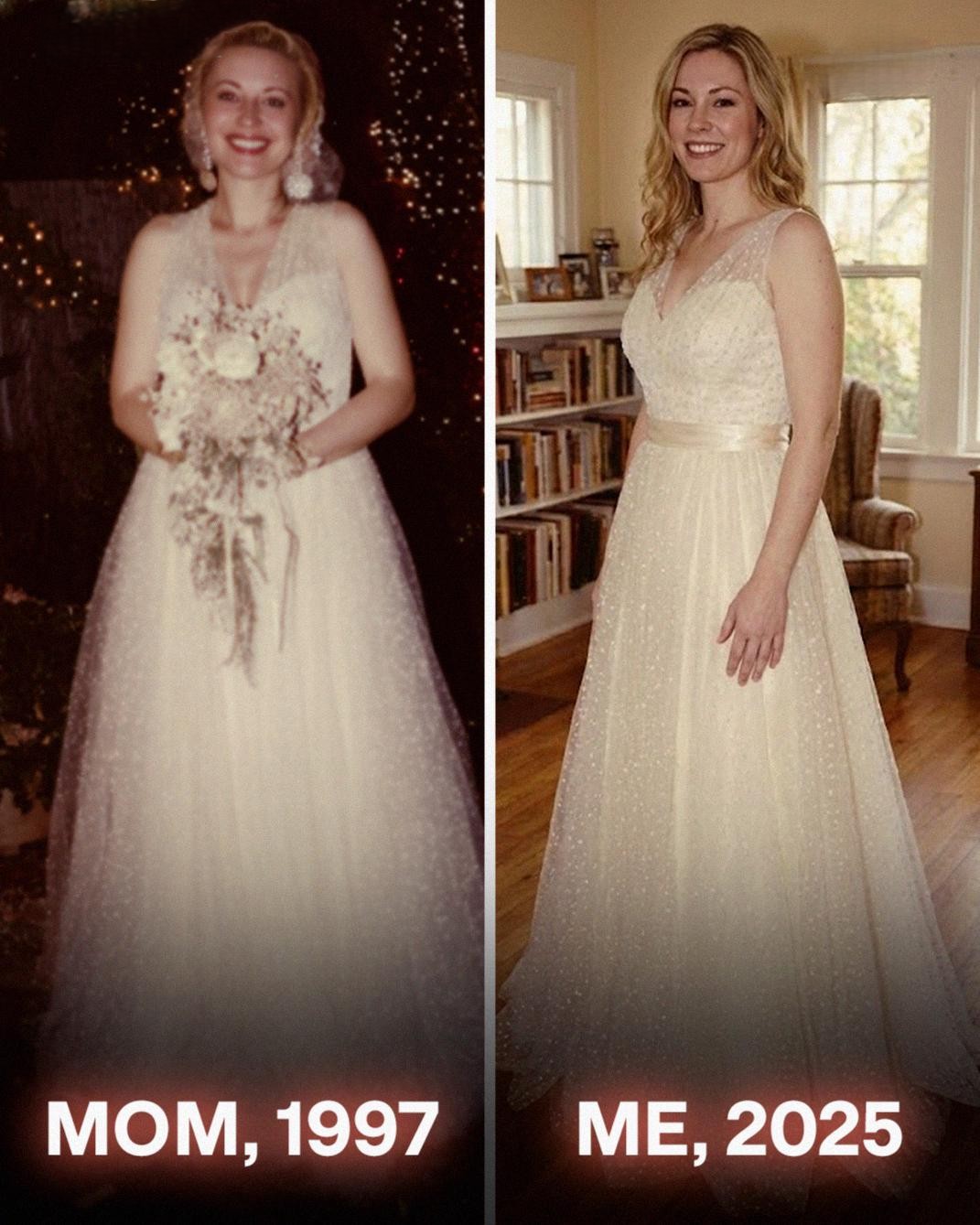
The profound weight of grief is often felt in the objects left behind—a handwritten recipe, a lingering scent on a silk scarf, or the soft texture of a cherished garment. For twenty-five-year-old Rachel, the journey to her wedding day was not merely a celebration of her love for her fiancé, Daniel; it was also a tender mission to honor the memory of her late mother. Losing her mother to cancer at the age of fourteen had left a void that no passage of time could ever fill. Rachel’s childhood home, once alive with her mother’s humming and the comforting rhythms of their shared life, had transformed into a quiet sanctuary of relics. Among these, none was more sacred than her mother’s wedding gown. Tucked safely away in a garment bag at the back of a closet, the satin-and-lace dress carried a promise Rachel had made to herself: that when she finally walked down the aisle, she would carry her mother’s spirit with her, stitched into every delicate fold and seam.
Yet the sanctity of Rachel’s home was tested three years after her mother’s death, when her father remarried. Sandra entered their lives with a polished exterior and a smile that never quite reached her eyes. At first, the changes seemed minor—a “modernization” of a “cluttered” house. A framed photo from the county fair vanished; a sentimental ceramic vase disappeared under the pretense of being cracked; even the hand-stitched pillows that had brought comfort during chemotherapy were replaced with sterile, catalog-ready alternatives. Slowly, deliberately, Sandra was engaging in a quiet, systematic erasure of the woman who had come before her. Rachel’s father, buried under the demands of his career, remained oblivious to the psychological toll this was taking on his daughter. Amidst the upheaval, Rachel kept her mother’s wedding dress hidden like a treasured relic, the last piece of her identity that she refused to let Sandra touch.
When Daniel proposed, Rachel’s vision for the wedding was already clear. She didn’t need to visit high-end boutiques or browse the latest designer collections; she already possessed perfection. The first time she tried the gown on in her room, the fit was flawless, requiring no alterations. Gazing into the mirror, Rachel did not just see a bride; she saw a reflection of her mother’s love. But peace was short-lived. Sandra discovered the dress, and with a curled lip and condescending tone, dismissed the heirloom as an “old rag,” a “relic” that would bring shame to the family. She insisted that only a modern, expensive gown could maintain their social standing, warning Rachel that wearing the old dress would humiliate them. Unaware of the cruelty about to unfold, Rachel remained steadfast.
The morning of the wedding arrived, brimming with excitement, but it quickly descended into chaos. When Rachel went to retrieve her gown, the closet was empty. The garment bag carrying her mother’s legacy had vanished. Sandra, leaning smugly against the doorframe, admitted to having thrown the dress in the trash, claiming she was sparing Rachel public embarrassment. Rachel felt as though she had lost her mother all over again, the pain intensified by the deliberate cruelty of the act. She collapsed, contemplating canceling the ceremony altogether.
Yet fate intervened through Mrs. Carter, a kind neighbor who had witnessed Sandra’s actions. Earlier that morning, she had spotted the dress in the trash and rescued it, recognizing its irreplaceable value. Though the hem was smudged from the alleyway, Mrs. Carter applied her wisdom and a few household remedies, restoring the satin to its original shimmer. When she delivered the gown to Rachel, despair transformed into quiet, burning strength. The stains were gone, and the lace appeared more delicate than ever, as if purified by the ordeal. Rachel realized then that no act of malice could ever erase the bond between a mother and her child.
The church ceremony became a striking study in contrasts. Sandra sat in the front row, expectant and smug, whispering to friends about the “decent” gown she assumed Rachel had been forced to find at the last minute. When the organ music swelled and the doors opened, the congregation gasped. Rachel walked forward, radiant in the vintage lace and shimmering satin of her mother’s era. The gown was not just a dress; it was a living testament to enduring love. Whispers of awe replaced the scorn Sandra had anticipated. Daniel’s eyes filled with tears at the sight of his bride, and Rachel’s father, standing at the altar, wore an expression of profound realization. Sandra’s mask of composure finally cracked; fury and embarrassment flushed her face as she grasped that her plan had spectacularly failed. The “relic” she had tried to destroy had become the centerpiece of the most beautiful wedding the guests had ever witnessed.
The true resolution unfolded during the reception. Rachel’s father, informed by Mrs. Carter of Sandra’s actions, stood to give a toast that would redefine their family’s dynamic. He spoke eloquently about strength, the permanence of love, and the inviolable nature of memory. Publicly acknowledging the beauty of Rachel wearing her mother’s gown, he restored the values Sandra had attempted to suppress. Overwhelmed by the collective admiration and the public rebuke of her cruelty, Sandra realized her influence had vanished. Humiliated, she departed from the reception—and ultimately from the family—leaving as abruptly as she had arrived.
In the weeks that followed, the home began to breathe again. Rachel and her father restored the photographs to the mantel, the cookbooks to the shelves, and the colorful curtains returned, replacing the sterile gray drapes. Rachel’s wedding day, which began as a tragedy, ended as a triumph of legacy over control. By standing her ground and wearing her mother’s gown, she had not only honored her mother’s memory but reclaimed her family’s future. The story of the gown became a local legend—a reminder that the most valuable possessions are not bought but carried in our hearts and preserved through courage. Rachel entered her new life with Daniel, assured that her mother’s love remained an unbreakable thread, woven into both the fabric of her past and the promise of her future.