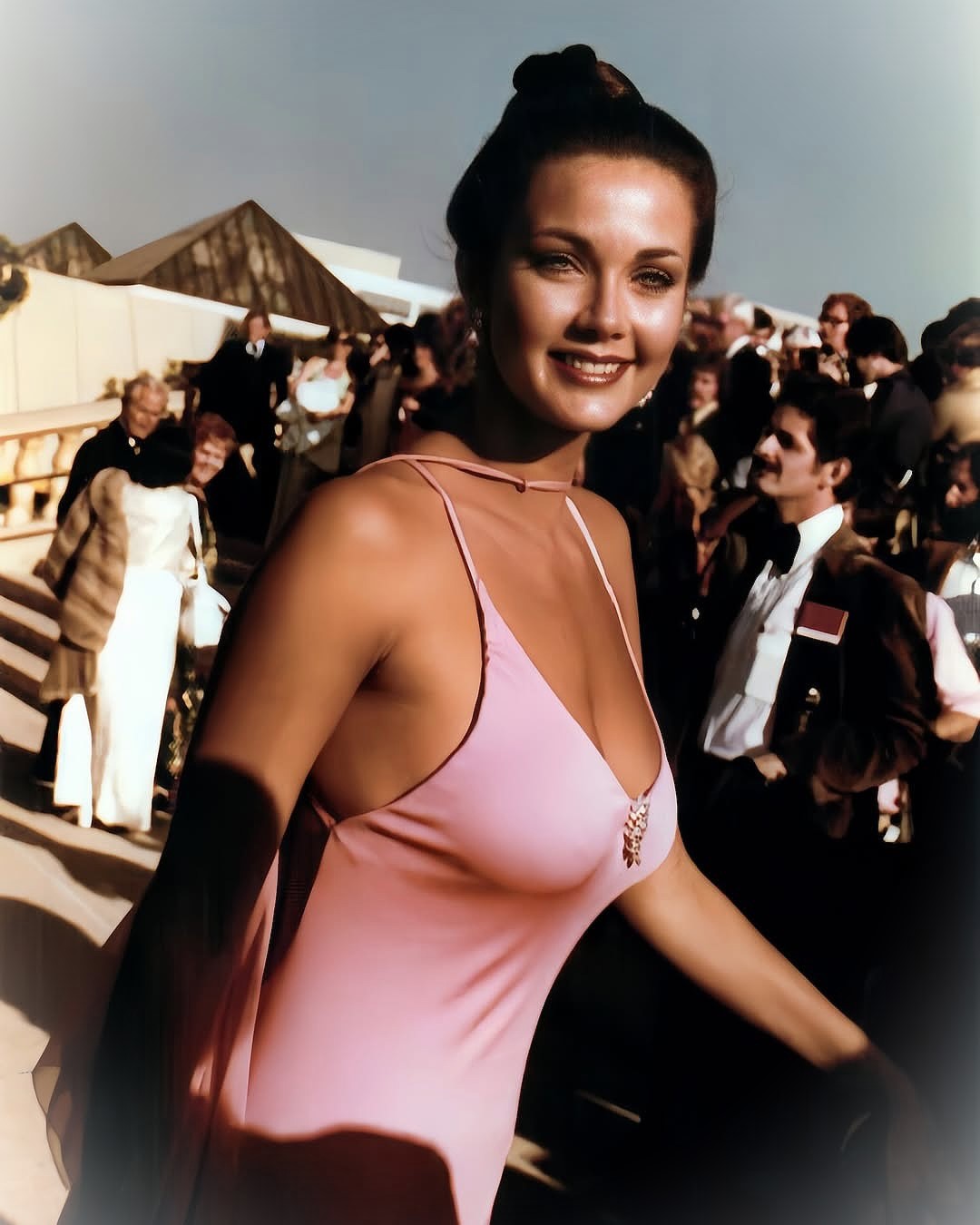
Lynda Carter is far more than a Hollywood beauty—she is a lasting symbol of strength, grace, and charisma, a figure whose influence extends well beyond the silver screen. Best known as the original Wonder Woman of the 1970s, Carter captivated audiences with her powerful yet compassionate portrayal of Diana Prince, blending heroism with humanity in a way that few actors had managed before. At a time when strong female leads were rare and often relegated to supporting roles, she redefined what a superhero could be. Her Wonder Woman wasn’t just a character in tights; she was a role model, a source of inspiration, and a beacon of empowerment for countless viewers who had longed to see women depicted as capable, courageous, and principled. Through Carter’s work, the idea of female strength on television was normalized, opening doors for future generations of actresses and inspiring millions to embrace their own power.
Born on July 24, 1951, in Phoenix, Arizona, Lynda Carter displayed a blend of poise, talent, and determination from a young age. Her early years were marked by a love of performance, an affinity for music, and an innate stage presence that would serve her well in the years to come. Carter first gained national attention after being crowned Miss World USA in 1972, a title that highlighted not just her striking beauty but also her intelligence and charisma. Unlike many beauty queens of the era, who often faded from public attention after their reigns, Carter used her platform as a springboard into a broader entertainment career. She had a deep passion for acting and music, and she was determined to build a career on her own terms. Within a few years, her path intersected with destiny when she was cast as Wonder Woman, a role that would define her professional life and cement her legacy.
From 1975 to 1979, Carter’s performance as Wonder Woman became the gold standard for superhero portrayals on television. Her iconic costume—a shimmering combination of red, gold, and blue—was instantly recognizable, and her commanding presence and dignified demeanor made her portrayal memorable to audiences of all ages. The transformation spin, in which Diana Prince became Wonder Woman, became a signature moment, emblematic of empowerment and wonder. Fans were drawn not only to Carter’s physical beauty but also to the integrity, courage, and compassion she infused into the character. She wasn’t just saving the day; she was setting an example, showing that strength and femininity could coexist harmoniously. The show’s themes of justice, truth, and equality resonated deeply during a decade when society was grappling with issues of gender roles, civil rights, and social change, giving Wonder Woman a cultural significance that extended far beyond entertainment.
But Carter’s talents and ambitions extended well beyond Wonder Woman. She built a diverse and enduring career in television, film, music, and voice acting. She released several albums, showcasing her skill as a singer and her love of performing. On screen, she appeared in a variety of roles, from dramatic television appearances to film projects, always bringing authenticity and warmth to her characters. Her presence in the entertainment industry was matched by her activism; she became a passionate advocate for women’s rights, LGBTQ+ causes, and Alzheimer’s research. She used her public platform to champion issues close to her heart, proving that her influence extended beyond the roles she played and the accolades she earned. Carter consistently highlighted the importance of integrity, compassion, and social responsibility, showing that celebrity could coexist with meaningful activism.
Her influence continues today, shaping not just the entertainment industry but also the cultural perception of female superheroes. Modern actors like Gal Gadot, who brought Wonder Woman to the big screen in the 21st century, have openly cited Carter as a trailblazer whose work laid the groundwork for the acceptance and celebration of strong, complex female protagonists. Decades later, Lynda Carter remains a beloved icon, celebrated not only for her talent and beauty but also for her unwavering commitment to empowering others and staying true to herself. She stands as proof that legends are not measured solely by the roles they play, but by the lives they touch, the barriers they break, and the inspiration they leave behind for future generations. In every sense, Carter exemplifies the enduring power of courage, grace, and charisma—an embodiment of the ideals that Wonder Woman herself represents.