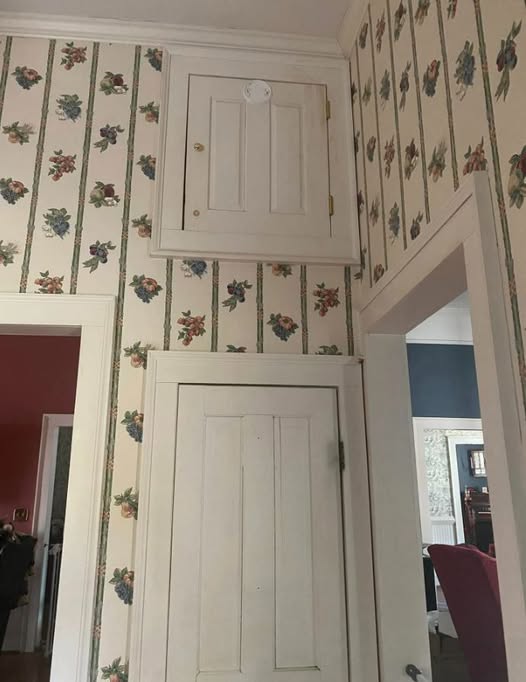
When wandering through the hallways of a century-old Victorian home or a modest mid-century bungalow, a keen observer might notice a peculiar architectural feature. High above a doorway, or tucked into the top corner of a kitchen wall, sits a tiny cabinet. These spaces are often so elevated that a step stool is needed to reach them, and their proportions can seem almost comical—sometimes only a few inches deep with a single, lonely shelf. In an era of open-concept layouts and sprawling walk-in closets, these miniature nooks might appear impractical, yet these “high cabinets” were far from accidental. They were the product of a resourceful society that treated every inch of a home as valuable, proving that in vintage home design, functionality often wore a guise of eccentricity.
The primary reason for these elevated storage spaces lies in the realities of domestic life before modern consumerism. In the 19th and early 20th centuries, houses were smaller, and storage had to be carefully planned. Without attached garages or climate-controlled basements, homeowners had to master vertical space. These cabinets were designed to hold “infrequently used” items—things essential to life but unnecessary for daily routines. Heavy winter linens, heirloom lace, hatboxes, or even the family’s lone suitcase could be stored in these upper reaches. By utilizing the space above doorways and near ceilings, builders kept the main living areas uncluttered and efficient. What today might be dismissed as “dead space” or “dust collectors” was, for a 1920s housewife, a vital organizational tool.
Beyond practicality, these cabinets reflect the craftsmanship of early builders. Unlike today’s mass-produced cabinetry, these units were often custom-built to fit the unique contours of a room. A builder noticing an awkward gap between a closet and the ceiling might frame it with wood and add a small door, rather than simply filling it with drywall. This “waste not, want not” philosophy extended to the very structure of the house, creating a home where every nook had purpose, reflecting a culture that prized longevity and resourcefulness over ease of construction.
Interestingly, these high cabinets also had financial advantages. In some areas, property taxes were influenced by the number and size of closets in a home, with larger closets often adding to the tax burden. Creative homeowners used high-wall cabinets as a loophole: too small to count as walk-in closets, yet still highly functional, they bypassed tax assessors while increasing storage. This was an early form of architectural “tax hacking,” combining domestic thrift with clever legal maneuvering.
Today, as minimalism and the Tiny House movement gain popularity, the wisdom of the high cabinet is being rediscovered. Modern homeowners are once again looking upward, using vertical space efficiently. Lofted storage beds, ceiling-mounted bike racks, and kitchen cabinets that reach the ceiling reflect the same principle: by accepting a minor inconvenience, like needing a step stool, one can dramatically expand storage without increasing square footage.
These cabinets also add aesthetic charm, hinting at the lives of past inhabitants. One can imagine a grandfather stashing holiday ornaments or a mother hiding preserves out of children’s reach. In an age when homes can feel sterile, these features provide texture and narrative.
Finally, the “out of sight, out of mind” approach eased the mental load of household management. By storing seasonal or bulky items up high, the lower living areas remained focused on daily life, a structural precursor to modern organizational systems that promote clarity and joy.
As urban density rises and real estate costs soar, the humble high cabinet stands as a testament to thoughtful design. It demonstrates that effective use of space matters more than sheer size. Whether hiding linens from dust or concealing valuables from tax assessors, these miniature cupboards exemplify how ingenuity can turn limitations into lasting solutions. History, it seems, is not only in books but embedded in the walls around us, waiting to be rediscovered above eye level by a new generation of resourceful homeowners.