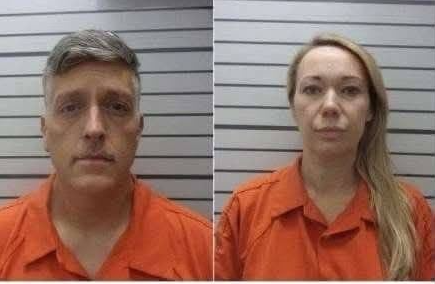
The funeral industry is widely regarded as a sector built upon sacred trust, moral integrity, and ethical responsibility. Families entering this space are placing their most intimate and vulnerable moments in the hands of professionals, expecting compassion, transparency, and respect for their deceased loved ones. Yet a recent criminal case in Colorado has revealed a catastrophic failure of oversight in this very industry. Jon and Carie Hallford, the husband-and-wife owners of the “Return to Nature Funeral Home,” have officially entered guilty pleas to 191 felony counts of abuse of a corpse. The shocking scope of their crimes has reverberated through the funeral profession, grief counseling networks, and consumer advocacy groups nationwide, exposing a macabre reality that stands in stark contrast to the eco-friendly image the couple projected.
Marketed as pioneers of “sustainable burials,” the Hallfords promised environmentally conscious services that included biodegradable caskets, reusable shrouds, and “return-to-earth” practices designed to minimize ecological impact. For families willing to pay premium prices, the hallmarks of eco-conscious responsibility became the allure of these high-value funeral contracts. In reality, these services masked a sophisticated fraud, concealing both a public health hazard and prolonged emotional trauma for hundreds of grieving families.
The forensic investigation into Return to Nature began in earnest in the fall of 2023, following multiple reports from residents of Penrose about a persistent, putrid odor emanating from a building marketed as a serene and sacred space for honoring the dead. When law enforcement, accompanied by hazardous materials teams, gained entry, seasoned investigators were met with scenes described as psychologically scarring. Nearly 200 decomposed bodies were discovered improperly stored, with some remains having been neglected for up to four years. Investigators revealed that the Hallfords had shifted their business model from providing mortuary services to criminal negligence, diverting pre-paid funeral funds into personal luxuries, including high-end vehicles, cryptocurrency portfolios, and an opulent lifestyle, while the remains of clients’ loved ones were left to decay in unrefrigerated conditions.
In El Paso County Court, the legal proceedings reached a pivotal milestone as the Hallfords accepted a negotiated plea deal. Depending on judicial discretion, the couple could face maximum sentencing of 15 to 20 years in state prison. District Attorney Michael Allen emphasized the incalculable punitive damages inflicted on the families’ mental health, noting that the betrayal extended beyond physical neglect to include active deception. Investigators discovered that families who had requested cremation were sometimes returned urns filled with dry concrete rather than the actual remains of their loved ones. This egregious misconduct has prompted multiple civil lawsuits and class-action litigation, with advocates seeking comprehensive reform of the Colorado funeral board to prevent future abuses.
From a compliance and regulatory perspective, the Return to Nature scandal highlights significant gaps in Colorado state law. At the time of the security breach, the state maintained some of the least restrictive licensing requirements in the country for funeral directors. This lack of accountability permitted unqualified individuals to operate under the guise of innovation and sustainability, taking advantage of families in their most vulnerable moments. Policymakers are now citing the Hallford case as empirical evidence for stricter legislation, including mandatory inspections, bonding requirements, and rigorous licensing exams, aimed at curtailing predatory practices in the death care sector.
The psychological impact on surviving family members has become a central concern for grief counselors. Many families must endure the secondary trauma of identifying remains through DNA testing and dental records—a process that is both logistically complex and financially burdensome, requiring the involvement of the Federal Bureau of Investigation (FBI). While the Hallfords’ defense attorneys cited financial distress and business mismanagement as mitigating factors, prosecutors argue that the deliberate nature of falsified death certificates and misleading communications demonstrates malicious intent.
The scandal also carries implications for the global funeral market. The rise of green burials and eco-friendly end-of-life planning has created a surge in consumer demand, particularly among environmentally conscious clients seeking to minimize their ecological footprint. However, the Penrose tragedy serves as a cautionary tale, reminding consumers that not all providers claiming sustainability adhere to ethical or legal standards. Estate planners and wealth management advisors now caution clients to perform thorough due diligence, including on-site facility tours and verification of professional credentials, before entering into costly pre-need agreements. The reputational and economic impact on legitimate green burial providers has been substantial, as public trust in the niche market has been eroded by the Hallfords’ fraudulent activities.
Digital marketing played a central role in the Hallfords’ scheme. Their polished social media presence and five-star reviews helped obscure criminal activity, creating an illusion of professionalism while deceiving vulnerable clients. SEO-driven narratives about “returning to the earth” were used as bait for consumers navigating grief, highlighting how technology can be exploited to exploit trust. Media outlets and true crime documentarians are now reconstructing the timeline of the Hallfords’ rise and fall, analyzing financial audits that reveal links between unpaid taxes and the neglect of human remains. While the guilty plea offers a sense of legal closure, the ethical ramifications will linger for years.
As sentencing approaches in April 2026, the Colorado judicial system faces the challenge of balancing statutory limits with an overwhelming public demand for justice. Families are advocating for maximum incarceration, arguing that abuse of a corpse on such an unprecedented scale merits the harshest possible penalty. Meanwhile, the El Paso District Attorney’s office continues investigating evidence of money laundering and wire fraud tied to Small Business Administration (SBA) loans that the couple allegedly misappropriated. The case illustrates how corporate greed can infiltrate even the most sacred sectors of society, exploiting trust and causing immeasurable harm.
For the wider funeral industry, the Hallford conviction represents a watershed moment in transparency and ethics. Trade associations, including the National Funeral Directors Association (NFDA), are revising codes of conduct to require biannual audits of storage facilities. Restoring public trust will necessitate a concerted effort by law enforcement, legislators, and ethical practitioners alike. The memory of the 191 victims remains a solemn reminder that the dignity of the deceased must be safeguarded by law and guaranteed through professional integrity.
Ultimately, the Colorado funeral home scandal stands as a tragic intersection of failed oversight, moral bankruptcy, and systemic greed. The hallmarks of the case—the overwhelming odor of decay, urns filled with concrete, and the staggering 191 felony counts—will forever be etched in the state’s legal history. As families painstakingly re-bury their loved ones with genuine dignity, the hallway of justice begins to offer a glimmer of accountability. The Hallfords’ admission of guilt represents the first step in a long and difficult journey toward healing for a community betrayed by those entrusted with its most precious memories. The Return to Nature saga remains a sobering case study in corporate deception, ensuring that the future of death care will be defined by rigorous scrutiny rather than blind faith.