On a quiet, seemingly ordinary evening in Madison, what began as a regular school night turned into a chain of events that none could have predicted—events that would ultimately save a life and remind a community of the extraordinary impact of everyday preparedness. The night started innocuously enough: eight-year-old Ryan Crosby sat alone at the kitchen table, a math book splayed before him, numbers blurring as fatigue mixed with frustration. Minutes passed slowly. Outside, the last light of dusk faded, and the quiet of the neighborhood settled in like a heavy blanket. Inside, however, something was off—something that Ryan didn’t fully understand yet sensed deeply.
Ryan had been home from school for hours. His backpack lay on the floor, untouched snacks sat abandoned on the counter, and the house hummed with the eerie silence of absence. His mother, Matilda, had not answered her calls all afternoon. Still, Ryan did what he had been taught: he finished his chores, opened his homework, and tried to solve the problems on his own. But when he reached a page he could not understand, frustration gave way to worry.
He remembered something his mother had said countless times: “Never be afraid to call 911 if you need help.” To Ryan, help was help, whether it meant firefighters, police officers, or someone to explain fractions. With the earnest logic and innocence of a child, he picked up the phone and dialed the familiar three digits.
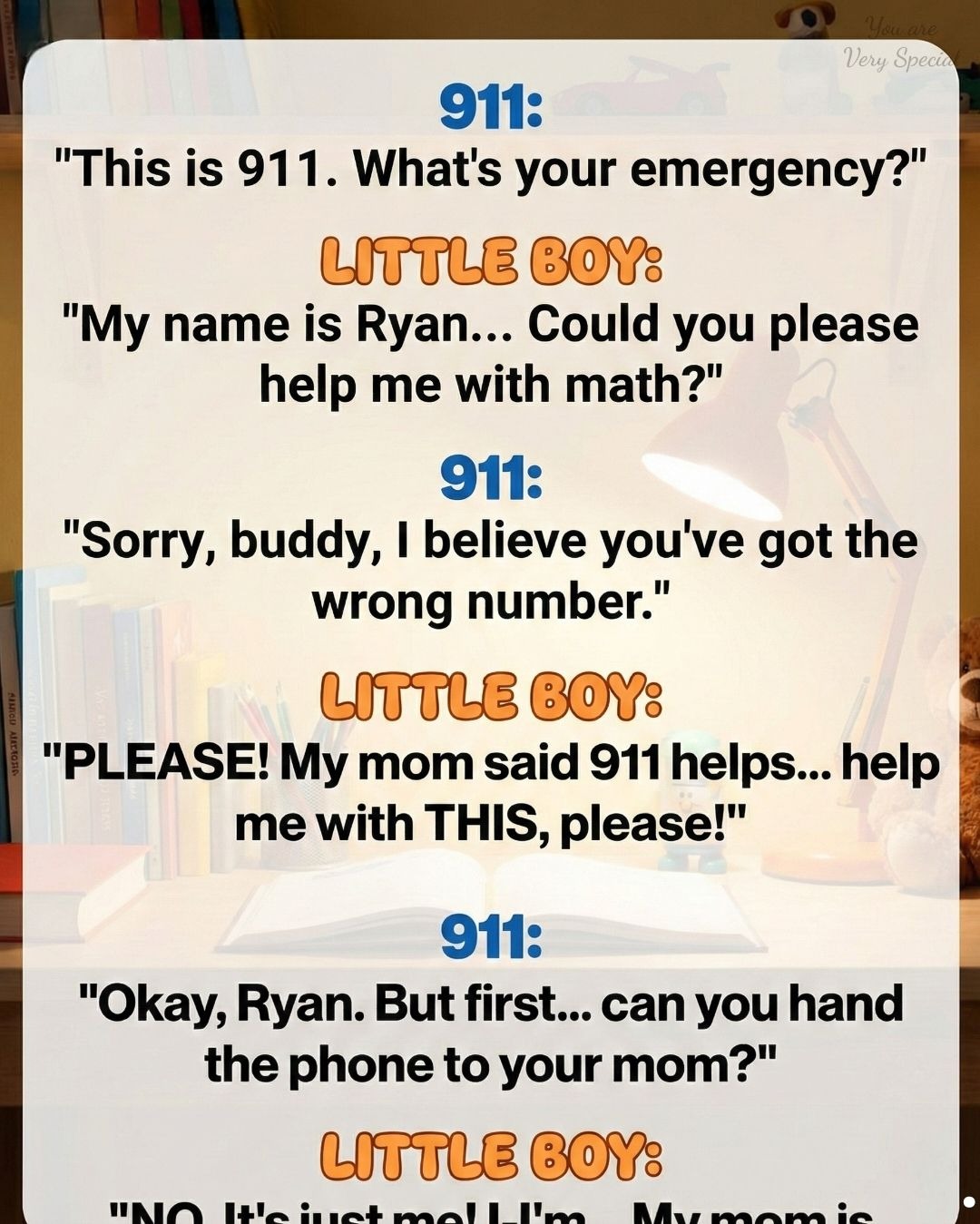
“911, what’s your emergency?” the dispatcher answered.
Ryan hesitated, then spoke softly: he needed help with his math homework.
The dispatcher paused. Calls like this were common, sometimes accidental, sometimes jokes. But protocol demanded caution. She gently reminded Ryan that 911 was for emergencies and asked if there was an adult present.
Ryan’s voice broke. Tears welled in his eyes as he admitted the truth: he was alone. His mother hadn’t come home all day.
Immediately, the dispatcher’s tone shifted. In an instant, what seemed like a minor misunderstanding became a serious potential emergency. She kept Ryan calm, gathering his address while alerting local police to perform a welfare check.
Within minutes, patrol cars arrived. Officers approached cautiously, aware that sudden fright could exacerbate the situation. Ryan opened the door and explained he had let himself in using a spare key, assuming his mother would return soon. The house was quiet. The night dark. And the absence of any adult raised urgent alarms.
Attempts to reach Matilda on her phone went straight to voicemail. The situation escalated from a welfare check to a missing person investigation. One officer stayed with Ryan, reassuring him, while others coordinated with dispatch to locate the last known signal from Matilda’s phone. The signal led them to the outskirts of town—near an abandoned mill and a rarely traveled service road.
Time became critical. Exposure, heat, or dehydration could prove fatal. Search units, including a K9 team, were deployed immediately. A German Shepherd named Caesar, trained for missing person searches, was given one of Matilda’s scarves to catch her scent. Within seconds, Caesar’s instincts kicked in, guiding officers through overgrown brush along a narrow path.
Less than ten minutes later, they discovered her car, partially hidden off the road. Matilda was slumped in the driver’s seat, unconscious, her condition worsening by the minute. Paramedics arrived swiftly, stabilizing her before transporting her to the hospital. Doctors later confirmed that heat exhaustion and dehydration had left her on the brink; without timely intervention, the outcome could have been tragic.
When Matilda awoke, her first words were about her son. She learned how a simple 911 call for help with homework had sparked a series of actions that ultimately saved her life. Overwhelmed, she broke down in tears.
Later that night, when she returned home, Ryan ran into her arms, clinging tightly, relief and love colliding in the quiet of their living room. In that moment, the lesson of preparedness, emergency education, and trust in authorities crystallized. Matilda had taught her son the power of asking for help, and it had made all the difference.
The story soon became widely shared across Madison. Police praised the dispatcher’s professionalism, officers’ swift response, and the efficiency of the K9 unit. Child safety advocates highlighted Ryan’s courage as a testament to why early education in emergency response matters.
Ryan didn’t just call about math homework. Unknowingly, he activated a full emergency protocol: 911 dispatch, police welfare checks, missing person procedures, mobile location tracking, and search-and-rescue operations—all in motion because a child remembered the lessons he had been taught.
In the aftermath, the community reflected on the quiet heroism embedded in ordinary acts. Ryan returned to school the next day, homework unfinished but carrying a lesson far more vital than numbers: asking for help is never wrong. And thanks to him, a mother’s life was saved.
What started as a simple misunderstanding became a profound lesson in preparation, trust, and the power of even the smallest voice. Ryan’s bravery, guided by knowledge and instinct, demonstrated that sometimes life-saving heroism comes from the unlikeliest of sources—a child who simply did what he was taught.