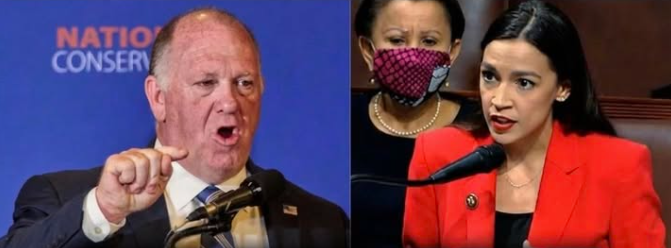
A thunderclap hit Capitol Hill, echoing down the marble corridors and ricocheting off the halls of power. One hearing, one confrontation, and suddenly the entire nation was embroiled in a familiar debate about borders, authority, and the very soul of America. The tension was palpable even before anyone spoke. Reporters leaned forward, microphones poised, pens scribbling furiously; cameras zoomed in on expressions that had been shaped by years of political warfare. When former ICE Director Tom Homan squared off with Representatives Alexandria Ocasio-Cortez, Pramila Jayapal, and a cadre of House Democrats, it was clear that the typical scripted hearing had fractured. The carefully choreographed formalities of legislative oversight dissolved into a raw, unfiltered contest of ideals and values. Voices rose, tempers flared, and decades of unspoken frustration, ideological clashes, and personal convictions came rushing to the surface like a storm breaking over a fragile shoreline.
Homan, hardened by decades in law enforcement and elevated to national prominence during Donald Trump’s administration, carried an aura of authority shaped by experience and enforcement. Every word he spoke was deliberate, weighted by years spent defending statutes that he insists safeguard communities. To him, the border was more than a political talking point—it was a front line, a place where the consequences of lax enforcement were tangible, measurable, and often catastrophic. He spoke as if the lives of countless Americans hung in the balance, each statute, each protocol, a lifeline. The former director’s rhetoric was sharp, unvarnished, and unapologetic. It didn’t just linger in the hearing room; it traveled instantly, amplified by social media, where clips of his statements were dissected, debated, and shared millions of times. Homan’s framing was simple yet potent: the law is the law, and ignoring or softening it invites chaos, suffering, and the erosion of order itself.
On the other side of the aisle, Representatives Ocasio-Cortez and Jayapal offered a moral and humanitarian counterpoint. Their argument was rooted not in enforcement metrics or border statistics, but in a vision of a nation defined by compassion, empathy, and human dignity. They pressed the idea that a society’s worth is measured by how it treats the desperate, the marginalized, and those who arrive at its doorstep seeking safety. They contended that enforcement without reform perpetuates cycles of trauma, that policies defended by Homan and his allies have torn families apart, disrupted communities, and deepened systemic suffering. Their voices, though different in tone from Homan’s, carried their own moral authority, grounded in lived experience, advocacy work, and an unflinching commitment to human rights.
The clash was not simply a matter of policy disagreement; it was a collision of worldviews. Homan’s vision of a secure, orderly America collided head-on with Ocasio-Cortez and Jayapal’s vision of an inclusive, compassionate nation. The hearing room became a crucible, where every statistic, anecdote, and historical reference was charged with ideological significance. Journalists noted the tension in every gesture: a pointed finger, a deliberate pause, a controlled breath before responding. Every nuance of body language was interpreted as signaling confidence, doubt, or moral conviction. Social media users dissected the scene frame by frame, debating not just what was said, but what it revealed about the character of each side.
The viral nature of the clip only magnified the stakes. Americans across the country watched, shared, and commented, turning the moment into a mirror reflecting the nation’s divisions. Conservative audiences often framed Homan’s words as truth spoken boldly, a necessary reminder of the consequences of leniency at the border. Progressive viewers highlighted the emotional resonance of AOC and Jayapal’s appeals, emphasizing the human cost of rigid enforcement and the importance of reforming broken systems. Comment sections, opinion pieces, and editorial panels erupted with debates over what justice truly means, who deserves protection, and how the balance between security and compassion should be struck.
This hearing, brief as it was in chronological time, achieved something far larger than legislative debate: it distilled years of ideological conflict into a single, dramatic confrontation. It forced Americans to confront difficult questions about power, morality, and the meaning of citizenship. The clip did not resolve the nation’s divisions; it laid them bare. It became a touchstone for discussions in homes, workplaces, and online communities—an enduring reminder that policy is never abstract, that laws and regulations shape lives, and that every decision at the border carries consequences far beyond the chamber of Congress.
Ultimately, the hearing’s significance lies not in any single testimony or point of argument, but in its exposure of the deep ideological fault lines that run through the country. Homan’s warnings about law, order, and the consequences of inaction remain part of a broader national dialogue. Simultaneously, AOC and Jayapal’s insistence on empathy, reform, and the protection of vulnerable populations continues to resonate with millions. The confrontation reminded Americans that the questions of who they are, what they value, and how they wish to exercise power are ongoing debates, never easily resolved.
In the end, the viral video became more than just a clip; it became a mirror for the nation, forcing every viewer to ask themselves which vision of justice, security, and compassion they are willing to embrace—and vote for. Every like, share, comment, and discussion contributed to the ongoing national reckoning over borders, identity, and the moral compass of a divided America. And though the hearing concluded, the echoes of that confrontation continue to reverberate, reminding citizens that the future of the nation is not determined by one side or the other, but by the continuous, often messy negotiation of what it means to be American.