The Unsung Ingenuity of the Safety Pin: A Hole with a History
The safety pin is perhaps the ultimate archetype of functional simplicity. Deceptively humble, it is merely a bent piece of rigid metal wire, capped with a spring mechanism and a clasp that locks the pointed tip securely away. It is a universal tool, found in every first-aid kit, sewing basket, and laundry room drawer, used for everything from temporary clothing repairs to pinning race bibs. Yet, in its very familiarity lies its profound obscurity: a tiny, often overlooked detail holds the key to its true, subtle genius.
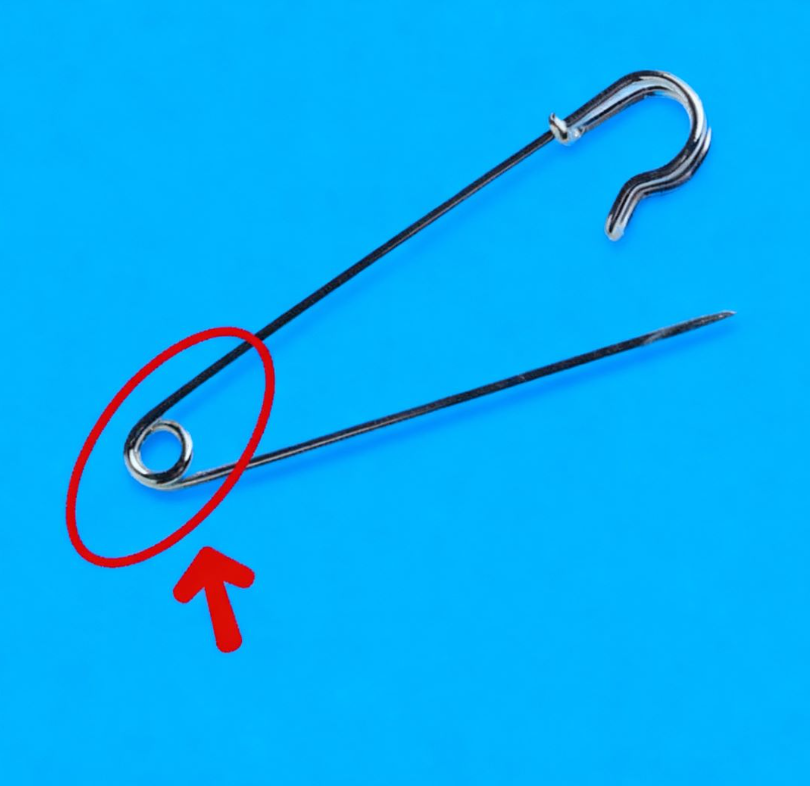
Examine the non-clasp end of a standard safety pin, the curve where the wire doubles back on itself to form the spring mechanism. You will find a minuscule aperture, a perfectly circular hole punched through the metal loop. Most users dismiss this small opening as a manufacturing artifact, a byproduct of the wire bending process, or perhaps a mere decorative flourish. In reality, this tiny hole is neither accidental nor ornamental; it is a deliberate, multi-functional design feature rooted in traditional textile work, and understanding its original purpose unlocks a centuries-old sewing efficiency trick.
This particular feature was incorporated by makers to address one of the most maddeningly frustrating tasks in garment construction and repair: threading elastic, ribbon, or drawstrings through fabric casings.
A casing is the channel of fabric sewn shut—common in waistbands of sweatpants, the necklines of hoodies, or the cuffs of sleeves—designed to hold a drawstring or elastic band. The standard, modern method for feeding the elastic through this narrow tunnel involves attaching a safety pin to one end and pushing the pin through the casing, inch by careful inch. This method is notoriously cumbersome. As the pin progresses, it invariably twists sideways, snagging on the seams, or, worst of all, slips entirely within the casing, forcing the user to fish blindly for the lost tip. This minor task, intended to take seconds, often spirals into minutes of irritating fiddling.
The tiny hole eliminates this frustration entirely. It is designed to be a secondary anchor point. Instead of simply attaching the safety pin to the end of the elastic or ribbon, the user should perform an additional, simple step: thread a thin piece of contrasting colored yarn, a strong piece of thread, or a thin cord through the little hole. Then use the pin’s regular mechanism to attach the pin to the drawstring end.
By securing a length of thread through the loop hole, the user gains a vital measure of control and guidance. As the main body of the safety pin is pushed into the casing, the user can simultaneously hold the trailing thread anchored at the opening of the casing. This simple tether performs several critical functions:
Prevents Twisting: The slight tension on the trailing thread helps keep the safety pin oriented correctly, preventing it from flipping sideways and snagging the fabric’s interior.
Emergency Retrieval: If the pin’s tip slips back into the casing or gets momentarily stuck, the trailing thread acts as a lifeline. A gentle pull on the thread is often enough to maneuver the pin back on track or retrieve it entirely without having to open the seam.
Speed and Precision: The method allows for a far more continuous push-and-pull movement, transforming a delicate, stop-start process into a smoother, faster operation.
This small, brilliant piece of ergonomic design is a testament to the ingenuity embedded within classic, low-tech tools. It reflects a time when efficiency was built into the very object, solving multiple problems without adding complexity or cost. For generations of seamstresses, tailors, and home repair experts, this method was simply known—an accepted piece of working knowledge passed down through practice.
The significance of the safety pin’s hole reaches beyond the practicalities of threading elastic. It serves as a potent reminder of the thoughtful, multi-purpose features that define traditional craftsmanship. Before the advent of highly specialized, single-function tools—like commercial drawstring threaders—designers were pressured to make every element of an object perform optimally. This philosophy is evident across the entire range of historic sewing implements: the flat, wide head of a tailor’s pin used for pressing seams, the strategically angled tip of a seam ripper, or the heavy weight of an antique sewing machine designed for stability and consistent tension.
Incorporating this ancient wisdom into modern practice does not require rejecting contemporary technology; rather, it encourages working smarter. By recognizing and utilizing the purpose of the safety pin’s hole, a modern user can save time, reduce frustration, and achieve better results. It is the perfect illustration of the principle that often, the smartest solutions are the simplest ones, subtly encoded within the objects we use every day.
The safety pin, invented in 1849 by Walter Hunt, has remained essentially unchanged because its design achieved a near-perfect balance between security, simplicity, and function. The small hole, a silent witness to countless adjustments and repairs across generations, stands as a quiet monument to that enduring ingenuity. It reminds us that often, the most effective forms of optimization are not found in complex software or expensive gadgets, but in the intelligent application of design to solve a common human problem. All that is required is for the user to pause, truly look at the tool in their hand, and understand why it was built the way it was.