Neighbors can be friends—or enemies—but I never expected mine to become both in a single day. What started as a simple favor quickly spiraled into conflict, leaving us both stunned.
After my husband, Caleb, left six years ago, I never imagined I’d be standing in the kitchen, wiping the same counter over and over, feeling like life had turned upside down.
I’m Lila, 48, a mom of two, working from home on a support hotline, trying to keep everything together. Life didn’t go the way I’d hoped.
Caleb and I once dreamed of a future together, the home we’d build, the life we’d share. But those dreams crumbled. He walked out one night, saying he needed “time to find himself,” leaving me with our eight-year-old son, Jude, and our baby daughter, Ivy. Apparently, he found more than time—he never returned.
“Mom, can I have some cereal?” Ivy’s soft voice pulled me from my thoughts. Her wide brown eyes, full of innocence, looked up from her chair.
“Of course, sweetie. Just a second.” I forced a smile and grabbed the cereal.
Jude, now 14, wandered in with his earbuds in, barely acknowledging me. “Gonna see Liam,” he mumbled before heading out.
I called after him, “Don’t stay out too late, and finish your homework!” But he was already gone.
Another ordinary day in the life I’d been piecing together since Caleb left—raising two kids, managing bills, keeping everything afloat alone.
Then Sadie, our new neighbor in her early 30s, knocked on my door. Her eyes were puffy, like she hadn’t slept in days.
“Lila… can I ask a huge favor?” she said, voice weak and trembling.
I nodded. “Of course, Sadie. What’s going on?”
She collapsed onto the couch. “I threw a big party last night and now I have to leave town for work. The house is a mess, and I can’t clean it. Can you… help me? I’ll pay, I promise.”
I glanced at the clock. My shift started soon, but the extra cash was tempting. “How much?” I asked.
“Two-fifty,” she replied quickly. “Please, Lila. I really need you.”
I hesitated, then agreed. “Okay. I’ll do it.”
“Thank you!” she said, hugging me briefly before rushing out.
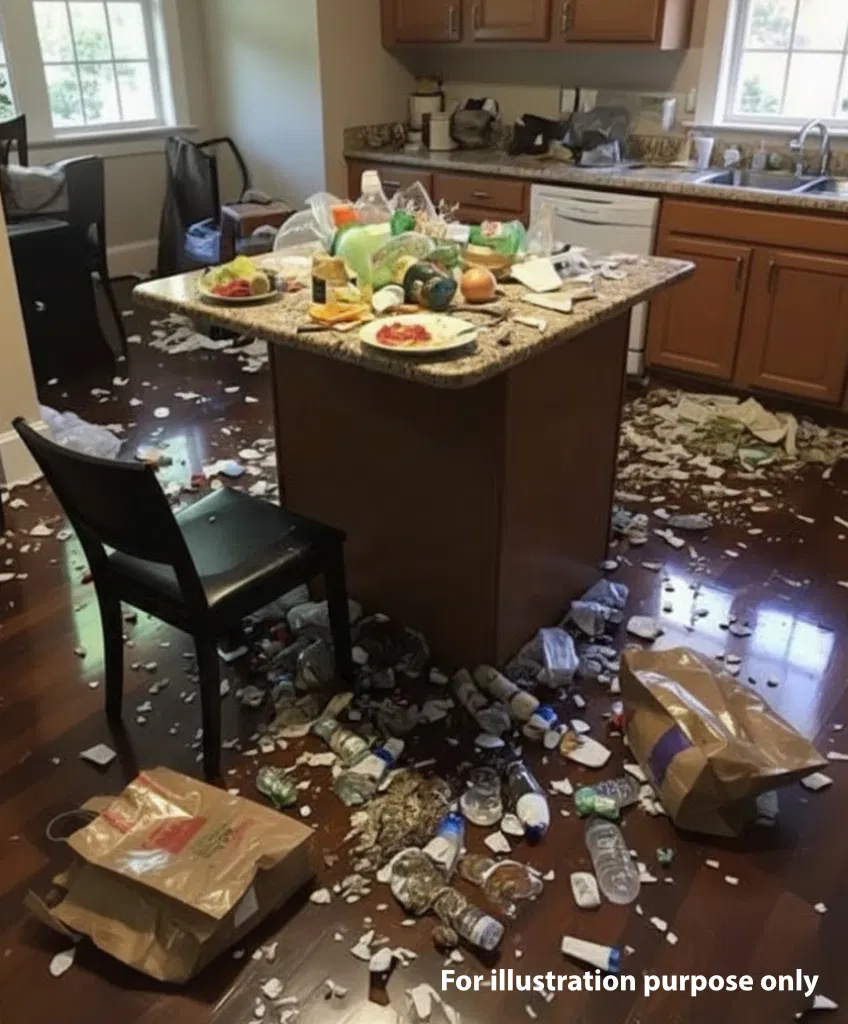
Her house was chaos. Trash, dishes, and debris everywhere, like a storm had hit. I spent two grueling days cleaning—scrubbing, sweeping, hauling out garbage. My back ached, my hands were raw, but I kept the $250 in mind. That money mattered.
When Sadie returned, I went over to collect.
“Your house is spotless,” I said, exhaustion barely hidden. “So… the payment?”
Her face went blank. “Payment? What payment?”
I felt a chill. “The $250 you promised.”
Her expression shifted from confusion to irritation. “I never said I’d pay you. You must be mistaken.”
I stood frozen. “You… promised!”
“No, we didn’t,” she snapped. “I don’t have time for this,” and brushed past me to leave.
Two days of hard work—and she just walked away. I trembled with anger, but knew I had to stay sharp.
I went home, paced the living room, and thought. If she wanted to play dirty, I could too.
Twenty minutes later, gloves on, I filled my trunk with trash from her house. The smell was awful, but my frustration fueled me. I pulled up outside her home and started unloading the bags inside—on the floors, counters, even the bed. Spoiled food, old wrappers, even diapers—it was messy, but satisfying.
“This is for you, Sadie,” I whispered. “You started it.”
I locked the door, slid the key under her mat, and left.
Later, I heard loud banging on the front door. I knew who it was.
“What did you do to my house?!” Sadie screamed, red with rage.
I crossed my arms, calm. “No idea what you mean. I never had a key. We never made a deal.”
She was speechless, then stormed off.
I watched her go, heart racing, but it wasn’t just anger—it was justice. She learned something that day: never underestimate Lila.
I closed the door, took a deep breath, and felt lighter. Sometimes, standing up for yourself means getting your hands dirty—and this time, it was worth it.