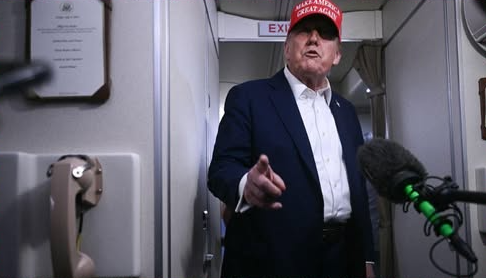
The knives are already out, and the battlefield of American conservatism is far more intricate than it appears on the surface. While Donald Trump continues to dominate the Republican Party, rallying his base with unmatched fervor and shaping the party’s messaging to reflect his own combative style, powerful and discreet forces are already positioning themselves for a future when he eventually steps aside. Whispers of a Bush family “counterstrike” are circulating among political insiders, hinting at a carefully organized network of long-time GOP operatives and donors preparing to reclaim influence from the Trump-aligned faction. These are not casual ambitions; they are the quiet maneuvers of old money, old power, and old grudges waiting to reassert themselves once the moment is right.
Long before Donald Trump redrew the Republican map with populist appeals and a nationalist agenda, the Bush dynasty had long defined the party’s tone and direction. George H.W. Bush and George W. Bush built a Republican Party that was globalist, corporate-friendly, and interventionist abroad. Their brand of conservatism relied on international alliances, free trade, and a certain decorum in political discourse. Now, as Trump’s second term—whether real or hypothetical—marches toward its eventual conclusion, reports suggest that the Bush camp is quietly reactivating its old networks, rebuilding donor ties that may have atrophied, and preparing a post-Trump blueprint for the party. Friends and allies speak in hushed tones of a “shadow Republican Party,” a latent infrastructure that waits patiently for the chance to declare that the era of Trumpism is only a temporary detour, not a permanent redefinition of what the GOP stands for.
Yet the Trump-aligned base, energized by populist rhetoric and a deep-seated distrust of the political establishment, is openly hostile to any notion of a Bush resurgence. To many MAGA supporters, a Bush comeback would be nothing less than an attempt by the very elites they believe they overthrew to claw their way back into power. Trumpism has fundamentally altered the Republican Party’s center of gravity: it is now more blue-collar, more nationalist, more skeptical of international entanglements and free-trade orthodoxies that once defined the party. The rise of suburban populism, anti-immigration sentiment, and aggressive cultural messaging has reshaped Republican priorities in a way that seems almost antithetical to the world of Bush-era policies.
Whether the Bush family is actively plotting a return or simply envisioning one in theory, the central tension is undeniable: the Republican Party is at war with its own past, wrestling with its identity, and facing a future where its internal divisions may define the next decade. As the political world turns toward 2028, there is no guarantee which faction—Trumpist or traditionalist—will ultimately prevail. The stakes are not merely about winning elections; they are about determining the ideological soul of a party that has long been a major force in American politics. From the fundraising rooms of Washington to the local party committees in key swing states, the strategies, alliances, and rivalries are quietly taking shape, signaling that the next chapter in GOP history may be as tumultuous as the one we’ve just witnessed.
The clash between old and new conservatism is more than generational; it is existential. For the Bush faction, the question is how to reclaim relevance without alienating the new base entirely. For Trump and his supporters, it is a matter of protecting the gains made through years of insurgent campaigning and cultural influence. And for the American electorate, it is a preview of the high-stakes battles that will shape not only the Republican Party but the political landscape of the country for years to come. The knives are already out, the lines are drawn, and the next moves will determine whether Trumpism is a permanent revolution or a temporary rebellion against the old order.