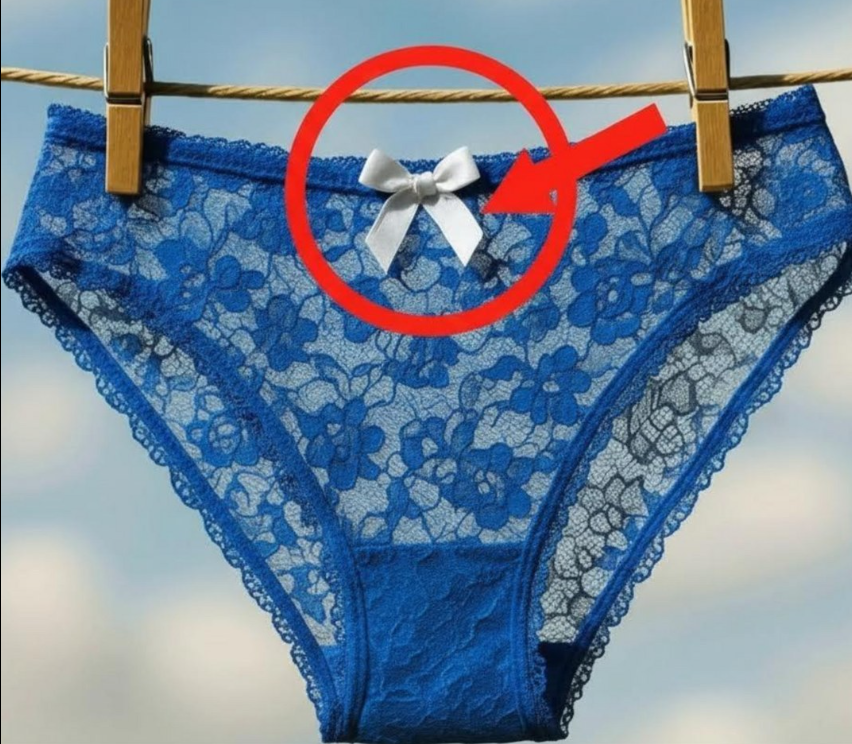
At first glance, women’s underwear may seem like a simple garment. But upon closer inspection, it’s clear that there’s a great deal of thought and design that goes into even the smallest details. From tiny bows to specific stitching patterns and extra layers of fabric, these elements aren’t just for decoration—they often serve practical, historical, and comfort-related purposes that many people may not even be aware of.
Let’s take a deeper look at some of the most common features of women’s underwear and their actual functions:
1. The Little Bow in the Front
One of the most recognizable features of women’s underwear is the small bow at the center of the waistband. While it might appear to be purely decorative, its origins are much more practical.
Before elastic waistbands and electric lighting, women often got dressed in dimly lit rooms. To help them identify the front of their undergarments, they relied on touch. The bow acted as a tactile marker, allowing them to quickly determine the correct orientation of their underwear without needing a light source.
Though we no longer dress by candlelight, the tiny bow still serves the same purpose today: it’s a simple way to quickly find the front of the underwear without having to turn it around.
2. The Cotton Gusset (Inner Lining)
Arguably the most important part of women’s underwear, the cotton gusset is sewn into the crotch area and plays a variety of crucial roles:
Hygiene: Cotton is highly absorbent, which helps wick away moisture and allows airflow. This reduces the risk of irritation and infection.
Comfort: The cotton gusset prevents synthetic fabrics from rubbing directly against sensitive skin, ensuring a more comfortable fit.
Protection: The gusset acts as an extra layer of fabric that reinforces a high-friction area, providing added protection.
Interestingly, extremely cheap underwear sometimes features a gusset that is either poorly sewn or completely non-functional. This underscores just how important a properly constructed gusset is in quality garments.
3. Stitching and Seam Patterns
While they may look simple, the stitching and seams on underwear are carefully designed to provide both functionality and comfort. Underwear needs to stretch and move with the body, so specialized stitching is used to prevent rips, discomfort, and irritation.
Each stitch type has its purpose:
Zigzag stitch: This adds elasticity to the edges of the garment, allowing for stretch and flexibility.
Overlock stitch: This prevents fraying and allows the fabric to move with the body without compromising durability.
Flatlock seams: These seams lie flat against the skin, reducing irritation, particularly in athletic or seamless styles.
Bonded seams: These create a smooth, invisible finish, especially under tight clothing.
Though it may seem effortless, the engineering behind these seams is surprisingly advanced, ensuring that your underwear fits comfortably and moves with you.
4. The High-Cut Shape on the Back
The upward curve found on many underwear styles is more than just an aesthetic choice—it has practical benefits as well. A higher cut in the back helps:
Improved mobility: The higher cut allows for greater freedom of movement.
Stay-in-place fit: It helps the underwear stay securely in place, preventing it from shifting or riding up.
Minimized bunching: A higher cut reduces the chances of your underwear bunching up under clothes.
Reduced panty lines: The higher cut creates a more seamless look, minimizing visible panty lines under clothing.
Ultimately, this cut enhances both the comfort and functionality of the underwear, providing a better fit and feel.
5. The Tag—or Going Tagless
Tags are essential for providing important information about fabric content, washing instructions, and the country of manufacture. However, many people find tags irritating as they can sometimes itch or cause discomfort.
As a result, many modern underwear brands have shifted toward:
Printing labels directly onto the fabric: This eliminates the need for traditional tags altogether.
Soft, tear-away tags: These tags are designed to be comfortable and easy to remove.
Smaller or strategically placed tags: To reduce irritation, some brands position their tags in areas less likely to cause discomfort.
The choice between having a tag or going tagless is all about striking a balance between practicality and comfort.
6. Elastic Edging
Elastic is a key component in how well underwear fits. It needs to be strong enough to keep the underwear in place, but soft enough to avoid cutting into the skin.
Elastic constructions can affect:
Support: Strong elastic provides the necessary support to prevent sagging or shifting.
Comfort: Soft elastic ensures that the garment remains comfortable, without digging into the skin.
Shape retention: Quality elastic helps the garment maintain its shape and elasticity over time.
Specialized types of underwear, such as shapewear, often incorporate silicone strips inside the elastic to prevent slippage and ensure that the garment stays in place.
7. Lace and Sheer Panels
Lace and sheer materials are not only beautiful but also highly functional. These lightweight fabrics provide a number of benefits:
Breathability: Lace and mesh allow for better airflow than thicker fabrics, helping to keep you cool and dry.
Flexibility: The natural stretch of lace and mesh allows the underwear to adapt to your body’s shape for a more customized fit.
Comfort: Soft lace, in particular, contours to the body, making it especially comfortable in styles like cheeky or bikini cuts.
In many cases, the most beautiful parts of lingerie also serve a functional purpose, offering both comfort and style in equal measure.
Conclusion
Women’s underwear is designed with thoughtfulness and attention to detail, balancing comfort, function, and aesthetics. From the historical origins of the tiny bow to the hygienic importance of a cotton gusset, every element serves a specific purpose.
Next time you shop for underwear, take a moment to appreciate these small features. You might find yourself noticing the practical design behind what seems like a simple garment—and understanding the engineering that goes into something we wear every single day.