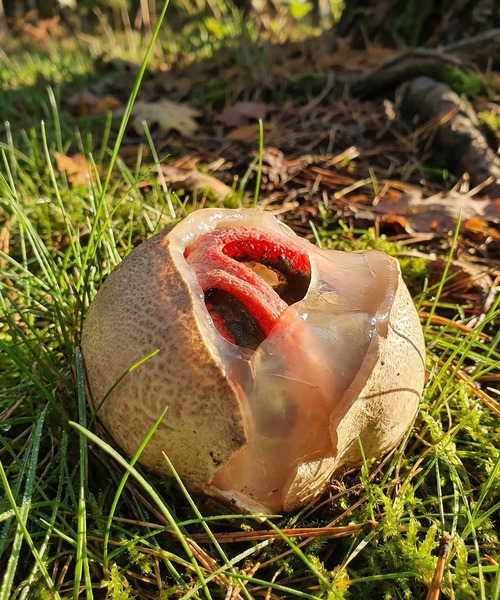
The stench hit me like a slap across the face, a shock that made my stomach twist and my head spin. It wasn’t just a smell; it was a warning, a sudden, unwelcome intrusion into the quiet rhythm of my morning. Metal seemed to taste sharp in my mouth, a tang of panic mixed with the faint metallic residue of my last coffee cup. My chest felt tight, pressed as if invisible hands were squeezing the air out, and every muscle tensed as though bracing for an immediate flight. Then there it was, wriggling—or at least moving in the way that something utterly unnatural moves—right among my flowers. A fleshy, red, grotesque mass, alien in form and utterly unapologetic in its presence, sprawled in the dirt. My first thought was that some unimaginable horror had been dumped in my yard, a creature from a fever dream that had somehow slipped through the cracks of reality into my well-tended garden.
For a heartbeat, or maybe several, I could not breathe. I stood frozen, caught between the instinct to flee and the almost inexplicable curiosity that kept my feet rooted in place. Every primal warning screamed at me to run, to escape, to call someone who could make it go away, but another, quieter voice inside insisted that I look closer. Not with courage, exactly, but with a strange compulsion to understand, to pierce the fog of fear with the sharp light of recognition. Slowly, hesitantly, I bent forward, ignoring the little scream in my head that said, Don’t, don’t, don’t.
Each step forward was a small act of rebellion against the monstrous narrative my imagination had already written. My mind, fertile in its terror, had turned a patch of dirt and a handful of blooms into a stage for horror: tendrils of red like blood, soft tissue that squirmed as though it were alive, a shape that refused categorization. Every sense was heightened—sight sharpening to pick up the tiniest twitch, smell magnifying the chemical tang of rot, the almost imperceptible brush of air as if the thing exhaled with me. And yet, in moving closer, I found that the shadows cast by fear were far darker than the thing itself.
Minutes stretched as I leaned over, hands trembling, until finally, light filtered through the panic: it was not a monster. It was a fungus, bizarre and uncomfortably fleshy, with colors and textures that seemed designed to terrify the uninitiated eye. Harmless, the search engine assured me, a peculiar species that thrived in decaying plant matter but posed no threat to humans or pets. Relief washed over me, a hot, almost embarrassing flush of gratitude that the grotesque horror had been nothing more than a trick of nature. What moments earlier had felt like imminent danger now felt like a lesson in humility, a reminder that the world does not conform to our expectations, that even our own carefully curated gardens harbor mysteries that defy familiarity.
Standing there with the hose still dripping in my hand, I let my gaze wander across the yard. Sunlight glinted off leaves, bees hummed lazily around bright petals, and the red fungus—once a symbol of terror—stood silently in the dirt, a small monument to patience and observation. I realized, as I watered the flowers around it, how quickly the mind fabricates monsters from the unknown. Fear had expanded to fill every blank space in my knowledge, every pause in the rhythm of what I thought I understood. For a few terrifying moments, my imagination had run unchecked, creating threats far beyond anything reality could conjure. And yet, once illuminated by simple truth, those fears shrank to size, leaving only the quiet, inescapable fact that the unknown is seldom evil—it is simply unfamiliar.
By the time I finished tending the rest of the garden, the grotesque little fungus had shifted in my mind. What had been a source of horror was now a teacher, patient and immovable, showing me that sometimes the scariest shapes in life are merely questions we haven’t dared to examine up close. Each curve, each color, each movement that had sent my heart racing now carried a strange, almost meditative grace. Fear is powerful, yes, but knowledge is transformative. Standing there in the early morning light, the garden alive around me, I understood something fundamental: the monsters we imagine often live only in the spaces where we refuse to look, and sometimes all it takes is curiosity, patience, and the courage to lean in just a little closer to turn terror into wisdom.