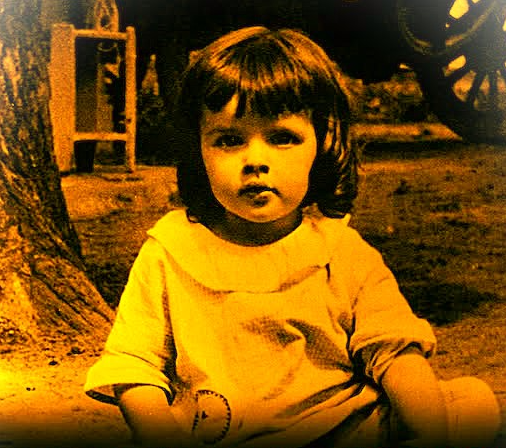
The spotlight didn’t just make Judy Garland shine. It burned her. Behind the Technicolor glow, the trembling notes of “Over the Rainbow,” and the smiles captured in glossy photographs was a child pushed beyond her limits, medicated into submission, and measured against impossible standards until she could barely recognize herself. Every cheer from a movie theater audience, every standing ovation, every review that praised her talent was another layer of pressure, another reminder that the world loved the work but never the person behind it. Each accolade hid another crack in her spirit. Each close-up masked another wound. Her rise was dazzling, a testament to extraordinary talent and perseverance, but the cost kept climbing, compounding in ways that would leave lifelong scars. The public saw the fairy-tale performances, the sparkling gowns, the magnetic energy; the private world behind the cameras was filled with exhaustion, fear, and constant correction, leaving little room for a childhood, let alone freedom.
She began life as Frances Ethel Gumm, a little girl born into backstage shadows and unstable ground. While other children played in yards or ran freely through neighborhoods, Frances learned to perform. She learned to charm, to please, to survive in an environment that demanded perfection as a currency for love and attention. Her mother’s ambition, at once protective and overbearing, became a prison. Every song, every dance, every carefully choreographed smile was another test she feared failing. Mistakes were not met with comfort; they were met with admonishment, a subtle erasure of worth unless she could prove her value through performance. Hollywood only sharpened that cage, replacing nurturing with contracts, care with chemicals, and normalcy with an endless call sheet. The studio system demanded obedience, conformity, and the relentless delivery of entertainment at the expense of personal health. She was fed pills to sleep and pills to wake, to calm her nerves and to energize her body, a child artificially adjusted to meet adult expectations. Yet even in that manufactured perfection, a raw humanity persisted, threatening to show itself between takes, in moments the camera wasn’t watching, in the way her voice cracked or her eyes shimmered with unspoken longing.
Yet even as she was reshaped to fit the studio’s mold, something in her refused to disappear. That fragile, aching honesty in her eyes, that quiver in her voice that could convey heartbreak in a single note, made millions of people feel less alone. She transformed her suffering into empathy, her pain into song, her exhaustion into a vehicle for connection. Each performance was not just entertainment but a bridge, a moment in which a vulnerable human being shared pieces of herself that could reach hearts worldwide. Judy Garland’s story is not just a tragedy of exploitation, nor merely a cautionary tale about the merciless demands of the entertainment industry; it is a testament to a woman who, despite relentless adversity, kept giving beauty to a world that often repaid her with pressure, neglect, and relentless scrutiny. Her voice carried the weight of a childhood lost and a life imposed upon her by forces larger than herself, yet still it floated above the noise, touching audiences and leaving an indelible imprint on culture. Her laughter, her tears, and her songs were a mixture of resilience and despair, a bittersweet reminder of what talent can endure, and what a person can endure for their art.
Remembering her means seeing the human being long buried beneath the legend. It is not enough to celebrate the iconic roles, the awards, and the public persona; one must also acknowledge the enormous toll extracted from the child who was forced to grow up too quickly. It means recognizing the sacrifices she made, the love she gave through her performances even when she had little to spare for herself, and the strength it took to continue creating art under impossible circumstances. To truly honor Judy Garland is to understand the complex interplay of vulnerability and strength that defined her life, to witness the courage it took to perform under unbearable pressure, and to vow to do better with those we place under the brightest lights. It is a call to empathy, to care, and to vigilance, ensuring that talent is nurtured, not exploited; that ambition is balanced with humanity; and that those who give their hearts in public arenas are not left hollow in private spaces. Her life is a mirror for the industry and society at large, a reflection of how brilliance can coexist with suffering, and how resilience can persist even when surrounded by forces intent on shaping it into something profitable but hollow.
Even decades after her death, Judy Garland’s voice continues to resonate, not because of her fame, but because of the raw emotion it carries. When people hear her sing, they are hearing the echoes of a life both extraordinary and tragically constrained. They are hearing the triumphs of a gifted artist and the quiet pleas of a little girl who never had the childhood most take for granted. Each note, each trembling phrase, tells a story of perseverance, of a human spirit that refused to be completely extinguished despite years of systemic pressure, personal hardship, and the relentless demands of an industry that saw her as a product before it saw her as a person. Her story challenges us to look deeper, to question the cost of entertainment, and to protect those whose talents bring joy to millions.
Judy Garland’s legacy is more than a collection of films, songs, and stage performances. It is a lesson in human resilience, the enduring power of artistry, and the courage to reveal oneself even when the world measures worth in applause rather than well-being. She teaches us that brilliance often comes with invisible scars, and that the strength to keep going in the face of relentless adversity is itself a form of beauty. She reminds us that behind every icon is a human being with needs, fears, and desires, and that understanding this human element is essential to truly honor the person and the art they leave behind. To remember her only as a star is to miss the full depth of her story; to remember her fully is to hold space for her pain, her humanity, and her incomparable gift to the world.