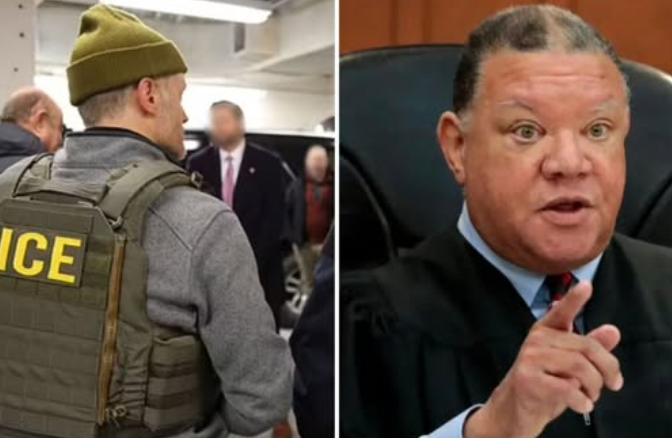
A Boston courtroom erupted into chaos. What should have been a routine criminal trial turned into a spectacle that captured national attention, raising urgent questions about the balance between immigration enforcement and constitutional rights. The defendant, Wilson Martell-Lebron, vanished in the middle of his trial—snatched by ICE agents before the jury could even hear his side of the story. The courtroom fell silent in shock, lawyers and spectators alike struggling to process what had just happened. Within moments, Judge Mark Summerville, visibly furious, did something almost unheard of: he wielded the court’s authority against a federal agent. The result was unprecedented—a contempt charge against the ICE agent involved, a criminal case dismissed, and a sanctuary city suddenly under siege, leaving the nation asking the same terrifying question: when federal power collides with constitutional rights, who wins?
Inside that courtroom, Judge Summerville drew a line in the sand that few had dared to approach. His ruling made it unmistakably clear: the Constitution and the right to a fair trial come before federal immigration raids. By holding ICE agent Brian Sullivan in contempt and immediately dismissing the criminal case against Martell-Lebron, Summerville sent a signal that resonated far beyond Boston: if federal authorities interfere with a defendant’s right to due process, they risk losing the entire case, and with it, credibility and authority. Defense attorneys described the ICE operation as “reprehensible,” condemning the agents for failing to identify themselves properly, and for whisking Martell-Lebron away in a pickup truck just as his trial had barely begun. Witnesses in the courtroom described the scene as surreal, a jarring clash of law enforcement power and judicial authority unfolding in real time.
But the story extends far beyond a single courtroom drama. At the heart of this conflict lies a deeper, ongoing tension between Boston’s sanctuary city policies, Trump-era courthouse arrest tactics, and a mayor determined to keep the city “welcoming” for immigrants. Federal agents’ actions collided directly with local governance and the city’s commitment to protect its residents’ constitutional rights. Martell-Lebron now remains in immigration detention. The criminal charges that once hung over his head are gone, but his future is far from certain. His case has become emblematic of a broader national struggle: the tension between federal immigration enforcement and local authority, between aggressive deportation policies and the legal safeguards guaranteed to every person facing criminal prosecution.
The contempt finding against the ICE agent does more than punish a single misstep. It forces prosecutors, police, and immigration authorities to reconsider the limits of their power. They now face a stark choice: continue pursuing deportation at any cost, even if it undermines judicial process and constitutional protections—or respect the courtroom as inviolable space where justice must not be compromised. The ruling is a reminder that in America, the rights of the individual—defendants, immigrants, and citizens alike—cannot be brushed aside lightly. The reverberations of this case will be felt in courthouses across the country, influencing how judges, defense lawyers, and federal agencies navigate the fraught intersection of immigration enforcement and constitutional law.
For the public, the Boston trial became a living case study in power, authority, and accountability. It highlighted the fragility of trust in the justice system when federal agents overstep their bounds. It reminded sanctuary cities that defending residents’ rights may require confronting federal power directly. And it underscored an essential truth: a courtroom is sacred, a place where due process, fairness, and the law itself must remain untouchable—even when national politics, aggressive enforcement policies, and human fear collide in the most explosive ways.
In the end, the Boston courtroom incident is more than a local story; it’s a symbol of the tensions shaping the nation. Martell-Lebron’s criminal case may have been dismissed, but the legal and moral questions it raised will continue to reverberate. Judges, lawyers, policymakers, and federal authorities are all now forced to grapple with a critical lesson: infringe upon a defendant’s constitutional rights, and the consequences can reach far beyond the individual, shaking the very foundations of law, order, and justice.