Ethan never looked like a man on the brink, but anyone who knew his life would have seen the truth instantly. At thirty-eight, he was a widowed father raising three kids alone in a cramped apartment barely holding itself together. The carpet smelled like old dust and spilled juice, the pipes groaned every night, and the walls were so thin he could hear the neighbors’ arguments as if they were happening in his own living room. But Ethan didn’t have the luxury of complaining. Three children depended on him.
Nina, eleven, carried more weight than any child her age should. She got her siblings ready for school, helped with homework, and watched Ethan with eyes far older than her years. Ruby, seven, was tender and empathetic, the kind of girl who cried when she sensed anyone else hurting. And Sam, five, was pure sunshine—blissfully unaware that their life was held together with threads that snapped a little more each day.
Three years earlier, Ethan’s wife, Lily, had died suddenly from a brain aneurysm. One moment she was laughing at dinner, the next she collapsed. Her absence carved a hollow space in him that nothing could fill, and the unpaid bills kept him awake at night. He promised his children he would figure it all out, even on the days when he didn’t believe himself.
He worked every job he could find: nights as a janitor in a downtown office building, weekends washing dishes in a diner, weekdays fixing anything anyone needed—clogged sinks, broken fences, the odd garage clean-out. He slept in scraps of four hours, ate whatever the kids didn’t finish, and poured every dollar into rent, utilities, and the fragile illusion of stability he tried to preserve for his children.
Every dawn he cut through the city park to save a few minutes on his way to work. And every dawn he saw the same three homeless people huddled on the benches near the fountain: an old man with frostbitten fingers buried under newspapers, a woman in a torn coat she wore like armor, and a silent young man who only shivered beneath the streetlights.
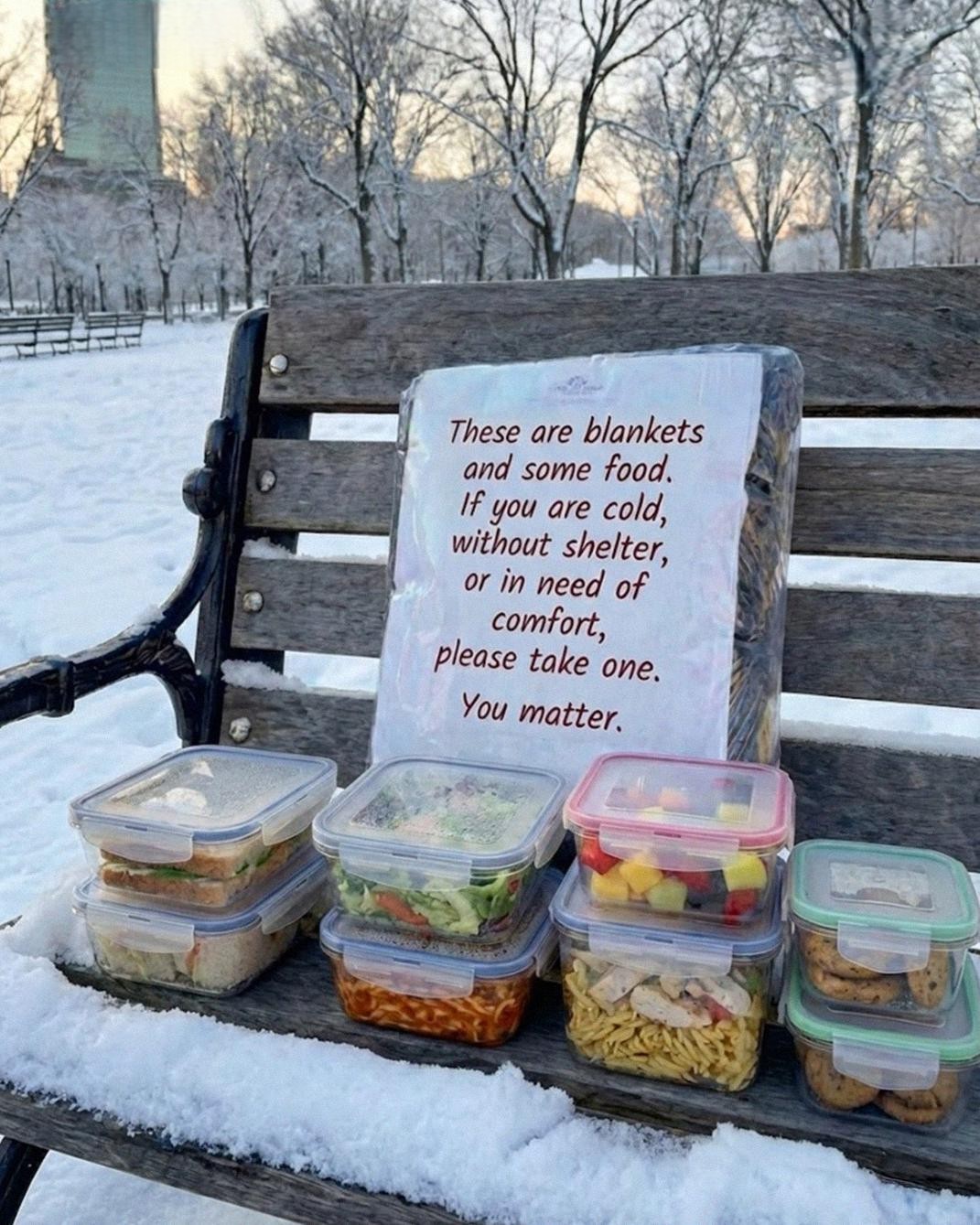
Ethan couldn’t walk past them without something twisting inside him. Maybe because he knew exactly how it felt to stand at the edge of losing everything. Maybe because he understood that the line between “secure” and “homeless” was frighteningly thin. One morning, after pawning his old toolbox for $25, he stopped at a discount store. He bought three cheap fleece blankets, canned soup, bread, and hand warmers. He wrapped them in plastic bags and left them on the old man’s bench. Inside, he placed a note:
“These blankets are not lost. If you are cold or hungry, please take one. You matter.”
He didn’t leave a name. He didn’t wait for thanks. He just walked away.
And he kept doing it. Week after week. Sometimes he skipped lunch so he could buy another blanket. Sometimes he told Nina they’d have to wait a bit longer for new school supplies. But still, he returned to that bench with whatever he could spare.
He had no idea someone was watching.
A month passed. Winter tightened its grip on the city, turning the park into a landscape of cold silence and quiet suffering. One night he left two blankets, socks, soup, and a small teddy bear for the homeless woman. The next morning everything was gone—except a flat stone holding down a folded note:
“Thank you. You are saving lives.”
The words struck him harder than he expected. No one had thanked him for anything in years.
But life didn’t loosen its grip. Two days later an eviction notice appeared on his door. Two months behind on rent. Seven days to pay $2,000 or vacate. Ethan stared at the paper until the letters blurred. That night he prayed for a miracle he didn’t believe would come.
And then, it came.
On the final morning—the day they were supposed to be out—a knock echoed through the apartment. Ethan assumed it was the landlord. He opened the door already prepared to beg.
Instead, an older man in a neat suit stood on the porch holding a leather briefcase.
“Mr. Ethan?” he asked gently. “My name is Charles. I’m an attorney. I need to speak with you.”
Ethan froze. Lawyers didn’t bring good news to people like him.
Charles sat at the kitchen table while the children peeked nervously from the hallway. He opened his briefcase and slid a photograph across the table. It showed Ethan, in the park before sunrise, placing blankets on the bench.
“You’re not in trouble,” Charles said softly. “It’s the opposite.”
Ethan said nothing, bracing himself.
“The elderly homeless man you helped—his name was Harold. He was my father.”
Ethan blinked in shock.
Charles continued. Harold had once been a wealthy philanthropist, donating millions to shelters, hospitals, and children’s programs. But five years earlier, his caretaker had stolen his identity, emptied his accounts, and disappeared. Already in the early stages of dementia, Harold couldn’t prove who he was. He slipped through every crack and ended up living on the streets while his devastated family searched everywhere for him.
Three weeks earlier, police had found him collapsed in the park. He was identified at the hospital. But by the time Charles arrived, Harold had passed away.
“He had almost nothing with him,” Charles said, voice trembling. “Except a small notebook. Every page was about you—the ‘mysterious kind man’ who brought him warmth and food. He wrote that you made him feel human again.”
Ethan bowed his head as tears spilled freely.
Then Charles pulled out the documents:
— the deed to a fully paid house in a safe neighborhood
— a cashier’s check large enough to erase every debt and struggle
— a scholarship fund for all three children, covering college and beyond.
And then, a letter in shaky handwriting:
“You didn’t know me, but you saved me. You gave me warmth, dignity, and hope. You saw me when the world didn’t. Please accept what I can no longer use. Take care of your beautiful children. Live the life you deserve.”
Ethan broke down as his children wrapped their arms around him, sensing the weight of what had just changed even if they didn’t understand every detail.
Charles stood and placed a firm, gentle hand on Ethan’s shoulder.
“My father believed that kindness is never wasted. It always finds its way back.”
For the first time in years, Ethan felt something real—hope.
Everything he had done quietly, without recognition, in the cold and in the dark… had finally come back to him when he needed it most.
And he understood the message Harold had left behind: