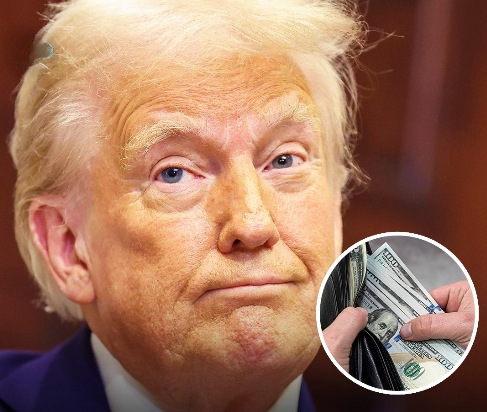
Millions of Americans are clinging to a hope that may never materialize. For weeks, the idea of Donald Trump’s promised $2,000 “tariff rebate” check has spread across social media, group chats, TV interviews, and desperate conversations around kitchen tables. People imagine a lifeline arriving just in time to cover overdue rent, medical bills, credit card payments, car repairs, heating costs, and the relentless rise in grocery prices.
But behind the catchy name and the political excitement lies a reality far more uncertain — and far more complicated — than most people realize. Hidden inside the fine print is not just bureaucratic red tape, but one single rule that could instantly disqualify millions of families who are already counting on the money.
Trump’s proposed rebate, often simplified as “free checks funded by tariffs,” rests on a fragile structure that mixes campaign messaging, legal ambiguity, and wishful economics. The core idea sounds straightforward: tariffs increase the prices that consumers and businesses pay for imported goods, and the government collects revenue from those tariffs. Under Trump’s proposal, that revenue would be returned directly to American households in the form of a $2,000 annual dividend.
But in practice, nothing is simple. Experts note there is not nearly enough tariff revenue to fund universal $2,000 payments. Importers may challenge the plan in court, arguing that redirecting tariff revenue this way violates existing budget rules. And most importantly, Congress has not approved a single dollar required to make any of this happen. Without congressional authorization, the rebate remains a proposal — not a program.
Even the nature of the payment is still undefined. Supporters envision a physical check arriving in the mail. Others within Trump’s circle have floated alternatives:
• a tax credit that reduces what workers owe,
• a rebate that applies only to certain types of income,
• or a delayed benefit that doesn’t activate until 2026, quietly merged with tax relief on tips, overtime, or Social Security income.
All of these possibilities suggest a future far less dramatic than the headline promise of “everyone gets $2,000.”
And yet, millions are waiting, believing relief is around the corner.
In the middle of all this confusion, speculation, and political noise, one requirement stands out above everything else — the rule that will decide who gets the benefit and who does not. It is the same filter used for past stimulus checks, and if Trump’s plan survives the legal and legislative hurdles, this filter is almost guaranteed to return.
That rule is income.
The government has historically relied on adjusted gross income thresholds to determine eligibility for direct payments. Unless something radically changes, the same thresholds are expected to apply here:
Individuals earning under $75,000
Married couples earning under $150,000
Eligibility would likely be based on the most recent tax return on file. That means if someone had a high-income year in 2023 or 2024 — even if they are currently unemployed, struggling, or financially devastated — the system may classify them as “too wealthy” to qualify.
Meanwhile, people just under the threshold could receive the full benefit.
Above the line, millions may find themselves disqualified instantly, watching from the sidelines as others receive payments they were counting on.
This income rule is the quiet gatekeeper of the entire proposal — the detail often mentioned briefly, if at all, but carrying the greatest impact. It determines who gets help, who gets excluded, and how politically explosive the rollout would be if the plan ever becomes real.
For now, the rebate remains a promise suspended between political ambition and economic reality, a lifeline that exists more in speeches than in policy. And until Congress acts, until legal challenges clear, and until funding is secured, the truth remains stark:
The money won’t arrive this Christmas.
It may not arrive next year.
And for many Americans — depending on their income — it may never arrive at all.