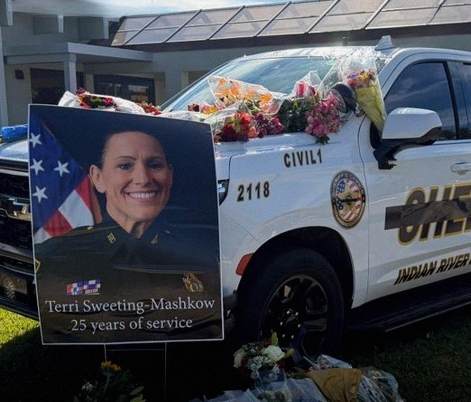
The knock on the door was supposed to be just another routine call. Indian River County Deputy Terri Mashkow had approached countless homes before, serving paperwork, mediating disputes, and keeping the peace. For most residents, her visits were forgettable—a formality, a momentary inconvenience, or perhaps even a relief. But on this late November morning, a suburban street in Vero Beach was about to witness a tragic rupture of ordinary life, where the veneer of calm would be shattered by sudden violence.
Six days before Thanksgiving, Mashkow arrived at the residence of Michael Halberstam, a 32-year-old man with a history of confrontations, criminal records, and a documented struggle with mental health issues. His mother, following legal procedures and seeking her own protection, had requested an eviction notice to remove him from the family home. What should have been a brief interaction—a signature on papers, a calm exchange, a departure—quickly escalated into a scene of unimaginable horror.
As Mashkow approached the front door, clipboard in hand, she likely imagined the interaction would be tense but manageable. Evictions often bring tension, yes, but she had faced these moments with a combination of professionalism and empathy. Residents knew her not just as a law enforcement officer, but as a neighbor, a mother, a stepmother, and a protector who looked out for others even off duty. She had earned respect through years of dedication, calm judgment, and a willingness to step in where others hesitated.
Minutes into the encounter, Michael Halberstam allegedly produced a firearm. Witnesses later described the scene as a sudden explosion of bullets, a terrifying storm where the familiar rhythm of suburban life was violently interrupted. Mashkow and another deputy were ambushed in the chaos. Bullets tore through the quiet, striking those tasked with maintaining order and safety. In the blink of an eye, the call transformed from routine service of papers to a life-or-death confrontation. Mashkow was fatally struck, a partner and a locksmith accompanying her were wounded, and Halberstam himself sustained critical injuries in the exchange of gunfire.
The aftermath rippled far beyond the immediate street. A devoted officer had been killed in the line of duty. A neighborhood that prided itself on safety was left grappling with the fragility of that security. Families and friends mourned a life abruptly taken, remembering Mashkow’s steadfast commitment to others, her laughter, and the everyday courage that had defined her work. The law enforcement community rallied, honoring her posthumously with a promotion that recognized not just her final act, but the countless moments of dedication preceding it. Her badge number became a symbol—a marker of sacrifice, of courage, of the thin line officers walk every day between order and chaos.
Investigations into Halberstam’s past revealed a pattern of concerning behavior. Online posts suggested deep-seated anger and a struggle with personal demons that went largely unnoticed until this tragic encounter. Criminal records, mental health challenges, and previous run-ins with law enforcement painted a portrait of a man whose actions had been escalating, yet no system had fully anticipated the sudden eruption of violence. In examining the details, authorities noted not just the specifics of the day, but the broader systemic issues that sometimes intersect—mental health, family dynamics, firearms access, and community safety.
For the community of Vero Beach, the incident became more than a headline. Streets once quiet with the rhythm of children playing and neighbors greeting each other were now a place of reflection, sorrow, and heightened awareness. Schools, workplaces, and local organizations held vigils and remembrance ceremonies. Residents grappled with complex questions: Could anything have been done to prevent this? How does a single act of bravery become a lasting emblem of sacrifice? What is the cost of safety in a society where routine calls can end in tragedy?
Loved ones spoke of Mashkow with reverence and heartbreak. They remembered her ability to calm disputes, to offer guidance, to step into danger willingly while shielding others. Her partner in that fatal moment remembered the precision, professionalism, and humanity she carried with her every day—a humanity that remained intact even as bullets flew. Her family mourned the gap her absence would leave: the birthday celebrations she would miss, the holidays without her warmth, the quiet conversations that made ordinary days extraordinary.
In the months that followed, Halberstam faced the consequences of his actions in court. Legal proceedings unfolded slowly, marked by testimony, examination of evidence, and an attempt to untangle the motivations behind the shooting. The sheriff’s office, shaken yet resolute, reflected on the policies, protocols, and training that shaped how deputies respond to potentially volatile situations. Each hearing became a reminder of the delicate balance officers maintain, and of the unpredictability inherent in serving the public.
Throughout the community, the narrative of that November morning became a story of sacrifice and reflection. Mashkow’s death was not only a loss—it was also a lens through which residents could understand the quiet heroism present in everyday life. It reminded them that the simple acts of service—delivering paperwork, checking on a neighbor, protecting a street—carry risks unseen and consequences unimagined. And while the details of that day remained harrowing, the memory of her dedication offered a form of solace: even in tragedy, courage and compassion endure.
Ultimately, the story of Deputy Terri Mashkow is not just about violence or loss. It is about the ordinary bravery embedded in public service, about the lives that hinge on the vigilance of a single officer, about the fragility of suburban safety, and about a community forever changed by a single knock on a door that was meant to be routine. Her legacy persists in the lives she touched, the safety she upheld, and the reminder that courage sometimes arrives quietly—until the moment it is needed most.