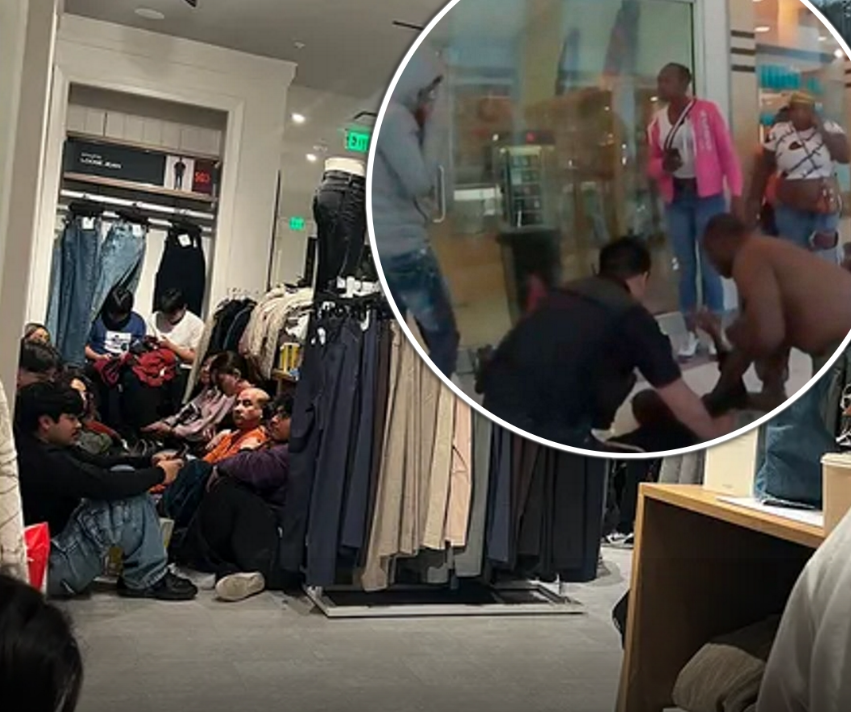
The first shot cracked through the air like a dark joke nobody wanted to hear. It was sharp, sudden, and completely out of place among the background chatter, music, and holiday sales announcements that filled Valley Fair Mall that Black Friday morning. Shoppers froze mid-step, their hands clutching coffee cups or shopping bags, eyes darting toward the source of the sound. A moment later, the second shot rang out, unmistakable and terrifying, and suddenly the sense of normalcy evaporated. In those first few seconds, what had been a bustling day of discounted deals turned into pure chaos. Strollers were overturned, merchandise tumbled to the ground, and abandoned bags created obstacles in the haphazard scramble for safety. People screamed, ducked, ran—anywhere they could. The second-floor Macy’s became the epicenter of horror. Three people were struck, their lives changing in an instant, while thousands of others were trapped in terror, unsure of whether to run, hide, or help. Doors slammed, children’s cries pierced the air, and employees whispered frantic updates into their phones, voices trembling: “Is this really happening? Is this how it ends?”
The sound itself became the first and most permanent memory for everyone who experienced it. Not the blaring sirens outside, not the shrill fire alarms, not the shouting or the chaos—but that initial sickening crack that transformed a crowded, familiar mall into a labyrinth of hiding places. Shoppers ducked behind perfume counters, pressed themselves into cramped stockrooms, or huddled together in service corridors, hoping the sound wouldn’t find them. Strangers clung to one another, offering silent comfort in the face of unimaginable fear. Rumors spread even faster than the gunfire itself: whispers of “multiple shooters” circulated in every direction, carrying panic faster than facts. Parents tried desperately to steady their voices so their children wouldn’t feel the full weight of terror. Employees tried to mask their shaking hands and racing hearts with the pretense of calm, offering directions and reassurance they barely believed themselves.
Amid the pandemonium, some instinctively protected strangers, grabbing a child who had been separated from their family, shielding others behind display racks, or guiding elderly shoppers toward exits. Others, paralyzed by shock, could do nothing but crouch low and whisper prayers into their sleeves. The air was thick with a mixture of smoke from holiday candles, the scent of spilled coffee and perfume, and the faint tang of fear that seemed to coat every surface. Every sound was amplified: the thud of footsteps on tiled floors, the clang of a shopping cart overturned in the panic, a child’s sob echoing down a corridor that had moments before been a mere passageway to the food court.
Meanwhile, security personnel scrambled, trying to coordinate lockdowns and guide people to safety. Police sirens began their approach, urgent and insistent, yet distant enough that inside the mall it felt like they were racing against an invisible clock that ticked too fast. Emergency messages crackled over radios, but for those trapped on the floors above and below the shooter, communication was nearly impossible. Time stretched, each second feeling like an eternity, every moment carrying the weight of potential tragedy.
When paramedics finally reached the victims, they found three people wounded, their pain acute but survivable. Doctors and emergency teams worked rapidly, triaging injuries and stabilizing those affected. Even as the victims were rushed to hospitals, the mall remained a chaotic scene, debris and shattered glass marking the path of terror. The psychological scars, however, were already etched deep into every mind present.
By the time authorities announced the all-clear, the relief was thin and fragile, barely brushing against the raw nerves of those who had survived. Though alive, the victims—and those who had witnessed the chaos—would carry invisible wounds long after the physical injuries healed. When the mall reopened the next morning under brighter lights, reinforced security, and a heavy police presence, a noticeable emptiness filled the spaces once bustling with holiday shoppers. Many stayed away, unable to reconcile the ordinary experience of shopping with the extraordinary trauma they had endured.
Routine holiday shopping, an event once synonymous with excitement and tradition, had become a collective scar. The echoes of that day lingered in the minds of those who had ducked behind counters, hugged strangers for comfort, and prayed that it would all end safely. Parents recounted to children what had happened in hushed tones, careful not to instill further fear, while employees replayed every movement, every decision, questioning whether they could have done more. The memory of a normal day disrupted so violently reminded the community that even the most familiar, mundane places—spaces designed for comfort, leisure, and commerce—could suddenly, unpredictably, become the setting of a nightmare from which they would never fully emerge.
Months later, those who returned carried with them small but telling rituals of caution: checking exits as they entered, keeping children close at hand, avoiding the crowded areas where the shots had echoed the loudest. The mall itself remained structurally the same, yet the emotional landscape had shifted irreversibly. Every hallway, every store corner, every staircase became a potential trigger for memories of fear, survival, and loss. And for all who had been there, the knowledge settled in: life could change in the blink of an eye, and the ordinary could become unimaginable without warning.
In the end, Valley Fair Mall’s Black Friday would not be remembered for deals or holiday cheer. It would be remembered for the fragility of safety, the resilience of those who survived, and the profound truth that terror can strike in the heart of the most ordinary places, leaving behind a mark that extends far beyond the physical damage, searing itself into memory, emotion, and the quiet moments when daily life resumes but never feels quite the same again.