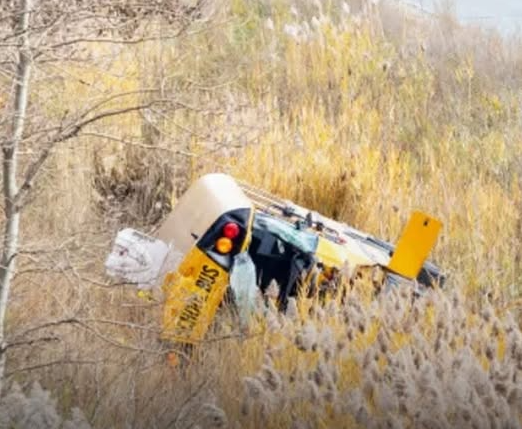
Eight years have passed since Tanzania experienced one of the darkest mornings in its recent history—an accident so devastating that the nation still recalls it with grief, disbelief, and sorrow. On May 6, 2017, a school bus carrying students from Lucky Vincent Primary School in Arusha veered off a rain-slicked road in the mountainous Karatu district and plunged into a ravine. Thirty-two children, two teachers, and the driver lost their lives. The tragedy reverberated across the country, leaving a collective sense of shock and mourning that seemed almost physical.
The children were on their way to sit for a mock national examination, an important step in their academic journey. For many, it was a moment symbolizing growth, responsibility, and potential. Teachers had prepared them carefully, parents had offered encouragement, and the school had planned the trip with pride. No one could have imagined that a day meant to celebrate achievement would instead be remembered for heartbreak so profound that even time struggles to soften it.
That morning, rain poured steadily over the Karatu highlands. The roads are known for sharp turns and steep drops, and poor visibility turned the journey perilous. Reports indicate that the driver lost control while navigating a particularly slippery section. The bus skidded, veered, broke through a barrier, and plunged into the ravine. Rescue teams arrived swiftly, but the devastation was already complete.
Families were contacted. Communities gathered. The scenes from the recovery effort were almost unbearable—twisted metal, scattered belongings, and the silence of a place that had just witnessed unimaginable loss. Tanzania mourned not only individual children but an entire generation of potential: future doctors, teachers, artists, leaders—sons and daughters whose lives were abruptly ended.
In the days that followed, the country came together in grief. Leaders issued statements of sympathy. Churches and mosques opened their doors for gatherings and prayers. Counselors assisted families struggling to process the shock. Even years later, the children’s names are spoken with the reverence reserved for national heroes. Their stories remain woven into the nation’s collective memory.
Each anniversary brings the return of emotions that never fully fade. Parents still visit graves, teachers still speak of the empty desks, and the school has built memorials to ensure the children’s legacy endures. For the survivors and families who lost loved ones, time has not erased the weight of absence. Yet it has strengthened their resolve to honor the victims by advocating for safer roads, stricter transportation regulations, and improved oversight of school travel.
Coverage republished in 2025 renewed attention to the tragedy, particularly for younger generations who were too young to understand it at the time. Readers were reminded not only of the heartbreak but of the lessons learned. Tanzania tightened enforcement of safety regulations for school vehicles, improved bus driver training, and undertook infrastructure projects in high-risk regions like Karatu. While these measures came too late for the 32 students lost, they became part of a promise that such a tragedy should never happen again.
The emotional impact of the accident extended beyond Tanzania’s borders. International communities connected to Lucky Vincent Primary School offered support and condolences, some providing scholarships in memory of the victims, others donating to rebuild facilities or support remaining students. The story resonated globally because it highlighted a universal truth: protecting children is a shared responsibility, and their loss is a wound felt by humanity at large.
The families themselves bore the heaviest burden. Many spoke of the ordinary moments they missed most—the laughter in the morning, helping with homework, tiny feet running through the house. They grieved over school uniforms still hanging in closets, textbooks left untouched, and birthday celebrations that would never occur. Some found strength in community, others in faith, but all were changed forever.
Eight years on, healing has begun, yet the ache remains. Anniversaries are marked with candles, flowers, and memorial gatherings. Survivors and families unite to honor not only the tragedy but the bright spirit of the children whose hopes were cut short. The event is a reminder that even in devastation, a community can rise—holding one another, remembering together, and ensuring that these lives are never forgotten.
Today, the Karatu accident is remembered not just as a bus crash, but as a story of resilience, reform, and the fragile speed of life. Thirty-two young lives, full of promise, left a lasting mark on Tanzania. The nation continues to grieve, honor, and learn, determined to make roads safer for every child who follows. Eight years later, the pain remains, the memories endure, and the commitment to protect children stands stronger than ever. The tragedy may now be history, but the children live on—in the hearts of families, in the halls of their school, and in the ongoing resolve of a nation forever changed by a rainy morning in May.