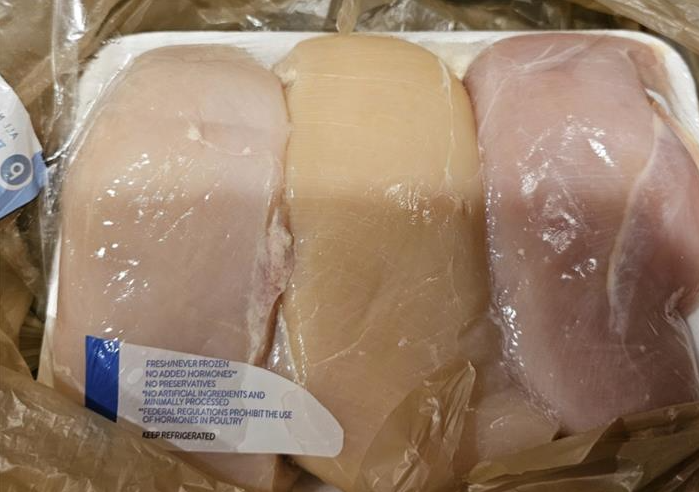
Most people barely notice the poultry section at the supermarket. A pack of chicken is just a pack of chicken—or so it seems. But sometimes, a shopper pauses and notices something unusual: two trays side by side, both labeled “chicken,” yet one is pale and almost white, while the other glows with a rich yellow tint. Same cut, same price range, yet the color difference sparks questions: Is one fresher? Healthier? Did something go wrong with one of them? The truth behind the difference runs deeper than most realize, revealing how chickens are raised, fed, and treated before reaching the grocery cooler.
White chicken—the kind most of us grew up with—typically comes from large commercial farms. These birds are kept indoors in controlled environments, fed standardized diets heavy in corn, soy, and wheat. The goal is efficiency: fast growth with minimal movement. Limited sunlight, minimal foraging, and lack of natural carotenoids result in pale pink or slightly bluish meat, and light-colored skin.
Yellow chicken tells a different story. Birds raised outdoors—free-range, pasture-raised, or fed diets with greens and marigold petals—consume carotenoids that tint their skin and fat. These pigments are the same that color carrots and flamingos. Chickens that roam, eating insects, grass, seeds, and plant pigments naturally develop a deeper yellow hue. In many regions, yellow chicken is prized for flavor and nutrition, a marker of old-fashioned farming and richer taste.
Is yellow chicken healthier? Sometimes, but color alone doesn’t guarantee it. Diet differences often indicate better nutrition—exercise, sunlight, varied food—but some farms add supplements like lutein or marigold extract to mimic the effect. The result: color hints at lifestyle, not necessarily quality.
Labels help guide choices. In the U.S., “free-range” means outdoor access, but not how often birds actually go outside. “Pasture-raised” implies significant outdoor time and space. Organic certifications limit antibiotics and additives, while “Certified Humane” or “Animal Welfare Approved” give more insight into living conditions. These factors matter far more than skin color.
Lifestyle also influences flavor. Active birds develop firmer, stronger meat that holds up in cooking and delivers richer taste. Chefs often prefer them for soups, stews, and braises because the meat retains texture and the broth deepens in flavor. Factory-farmed birds, by contrast, grow fast and remain soft, with higher water content—hence why some store-bought chicken releases excess liquid during cooking.
Even skin tells a story. In some cultures, yellow skin signals superior texture and taste; in others, white is considered cleaner or more neutral. Neither is wrong. Preference often comes from tradition, upbringing, and regional farming practices. Skin color indicates diet and environment—not safety or freshness.
For the best chicken, think beyond hue. Look for firmness, clean smell, and proper cold storage. Farmers’ markets allow direct questions about diet. In stores, check for excess water in the package and avoid any bird with off odors.
The white-versus-yellow chicken debate reflects a larger truth: a bird’s lifestyle directly affects its meat quality. Chickens raised outdoors with natural diets develop richer, more nutrient-dense meat, while indoor, industrially raised birds grow quickly but lack depth in flavor and nutrients.
In the end, color is just the starting point. The real story lies in how the chicken lived. A golden tint may hint at a natural upbringing—but only if farming practices match. Labels, texture, and flavor reveal the rest.
Next time you see a pale breast next to a yellow one, don’t assume superiority based on appearance. Biology, diet, farming method, and regulations all play a role. Understanding these factors makes you a smarter shopper and a better cook. Whether roasting, simmering, or pan-searing, the choice comes down to your priorities: nutrition, ethics, flavor, or cost.
Color starts the conversation—but the life behind the chicken is what truly matters.