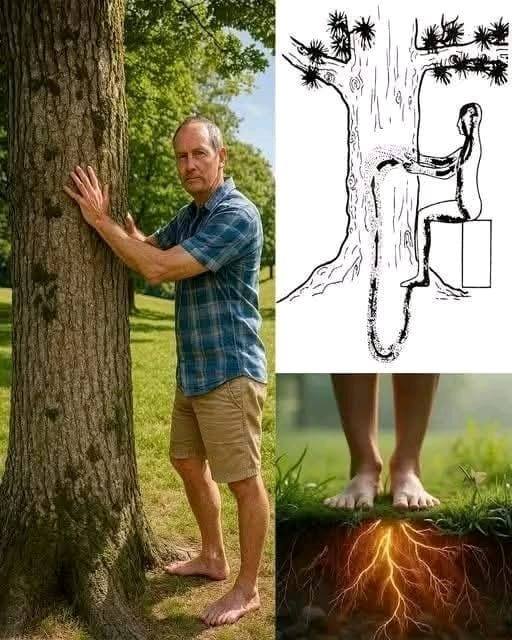
This simple 15-minute grounding practice offers a gentle yet powerful way to reconnect your mind and body with the natural world. It requires nothing but your attention, bare feet, and a living tree—no tools, costs, or special skills. In a modern life full of screens, concrete, and constant distractions, this ritual brings you back to something ancient and steady: direct contact with the earth and one of its most enduring life forms.
At its heart, the practice combines two time-honored traditions. The first is grounding, or “earthing,” which means connecting your bare skin to natural surfaces like grass, soil, or sand. The second is tree connection, a mindful practice in which you physically and mentally engage with a tree as a symbol of stability and resilience. Together, they create a brief but meaningful pause that helps calm the nervous system and move your body out of constant alert mode.
The principle behind grounding is simple. Humans evolved with regular contact with the earth—walking barefoot, sleeping near the ground, and spending much of the day outdoors. Today, shoes, buildings, and artificial environments have disconnected us from that natural link. Grounding allows the body to regain balance through direct sensory input.
Standing barefoot on natural ground awakens thousands of nerve endings in the feet, sending signals to your brain that the world is safe and stable. Many people notice changes within minutes: slower breathing, less mental chatter, and a sense of calm. This reaction is connected to the parasympathetic nervous system, which governs rest, digestion, and recovery.
Adding a tree deepens the experience. Trees are natural anchors: their roots extend deep into the earth, and they endure storms, droughts, and changing seasons. Placing your hands on a tree connects you with this living, resilient system, creating a subtle but profound sense of calm and perspective.
To start, choose a tree that feels welcoming. It doesn’t need to be exotic—any mature tree with visible bark or roots works. Stand barefoot on nearby natural ground: grass, soil, sand, or packed earth. Avoid concrete or artificial surfaces, as they block the sensory connection.
Take off your shoes and let your feet sink into the ground. Feel the temperature, texture, and unevenness. Gently shift your weight from heel to toe, releasing tension in your ankles, calves, and lower back.
Place one or both hands lightly on the tree trunk. No need to hug or press hard—a soft touch is enough. Feel the bark: rough or smooth, warm or cool. Close your eyes if it feels safe, and breathe slowly: in through your nose, out through your mouth. Let your breath find its own rhythm.
Focus on the physical connection: your feet on the ground, your hands on the tree. Stay upright but relaxed. If your mind drifts, gently return to the sensations of your body in contact with nature. This isn’t about clearing your mind completely—it’s about rooting yourself in the present.
Some people find it helpful to imagine the tree’s roots extending deep into the soil, taking away tension from their body. Others focus on the tree’s quiet, steady presence as a reminder that life moves at a slower, more deliberate pace than our hectic routines. There’s no single “right” way to practice; the key is allowing yourself to slow down without judgment.
Fifteen minutes is sufficient for noticeable effects without demanding a big time commitment. Short, consistent sessions are often more sustainable than long, occasional ones. You might also keep a journal to record sensations or insights afterward. Some notice emotional clarity, others simply feel more grounded and rested.
Optional enhancements include water for hydration, soft music, or a familiar scent like lavender for extra sensory grounding—but these are not necessary.
This ritual is especially useful during stress, emotional overwhelm, or mental fatigue. It can serve as a reset between tasks or a calming end-of-day routine. Some people practice it in the morning to start the day centered, while others use it to reconnect after too much time indoors or online.
It’s important to remember that grounding is not a treatment or cure. It’s a supportive practice that encourages the body to regulate itself naturally. Its benefits are subtle but accumulate over time, improving body awareness, emotional balance, and overall well-being.
In a culture that equates productivity with worth, standing barefoot beside a tree may feel strange or “unproductive.” Yet there is quiet strength in stillness. Trees don’t rush—they grow. They don’t resist seasons—they endure. Spending a few minutes with them reminds us that stability comes from deep roots and steady connection, not constant motion.
This ritual asks only for your attention: no purchases, no performance, no explanations. Just you, the earth beneath your feet, and a living tree offering silent companionship. In those fifteen minutes, the noise of the world softens, and a sense of balance can return.