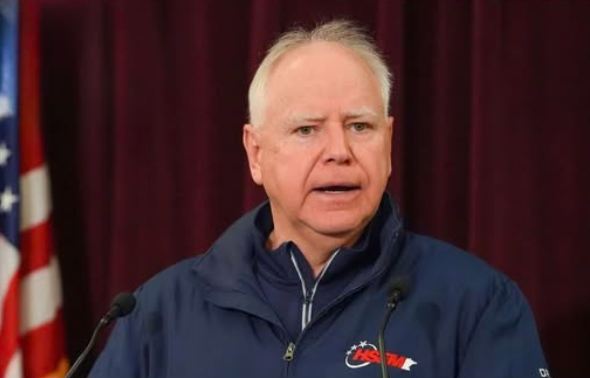
Minnesota’s political dam just cracked. Nearly 100 mayors, spanning from tiny rural outposts to bustling metropolitan centers, have delivered a stark, public rebuke of Governor Tim Walz and the state’s handling of sweeping Medicaid and welfare fraud. Their message is blunt: fraud at the highest levels is siphoning away local budgets, driving up property taxes, and eroding essential services that households rely on. Families are left bearing the cost, while cities like St. Paul struggle to maintain core services amid mounting financial strain.
The mayors’ letter is more than a mere grievance; it is a clarion call from the officials who stand closest to the fallout. While billions vanished through Medicaid and pandemic-era fraud schemes, city leaders found themselves explaining to residents why property taxes were rising and why police, fire, and infrastructure budgets were being stretched to the breaking point. They are not arguing abstractions or theory. They are balancing precarious budgets, freezing or cutting worthy projects, and facing angry voters at crowded town halls and in grocery-store aisles.
What makes this moment particularly explosive is the collapse of trust. The mayors cut across party lines and include former Walz allies who no longer stand by him uncritically. They are now openly questioning whether the state can be trusted to manage money prudently, enforce laws consistently, and shield taxpayers from exploitation. Unless Walz delivers tangible reforms, prosecutions where warranted, and real oversight mechanisms, this will not remain a policy dispute. It risks deepening into a narrative of systemic failure — and a governor who appeared to look away as cities began to revolt.
In the weeks ahead, the administration will face a critical test: will it acknowledge fault, disclose comprehensive investigations, and implement reforms that restore confidence at the local level? Citizens, particularly those in districts most affected by budget squeezes and service reductions, will be watching closely. The pressure on Walz to demonstrate accountability and to commit to verifiable improvements could redefine his tenure and Minnesota’s political landscape for years to come.